
 EN
EN
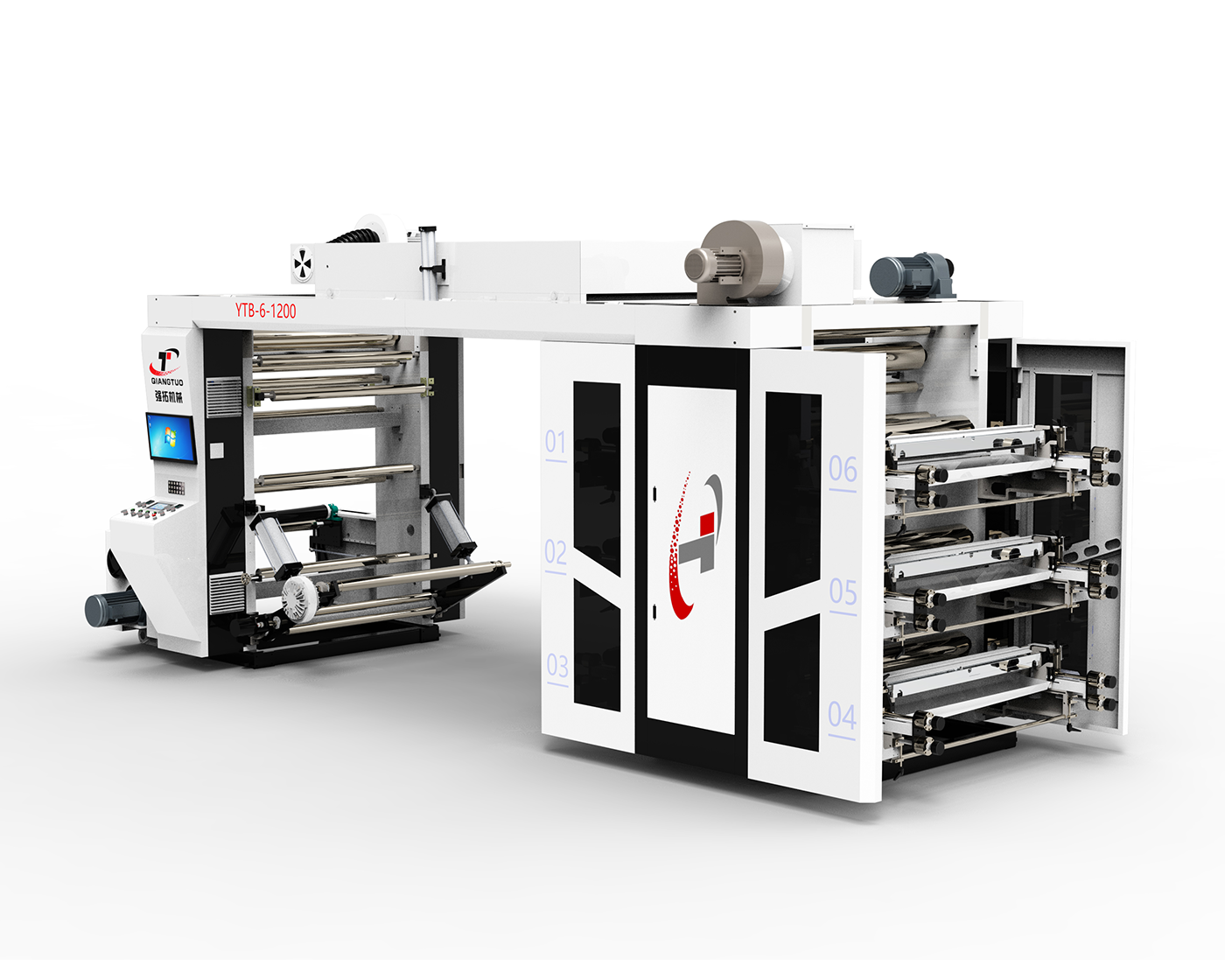
Why Are Flexographic Paper Roll Printing Machines Best Suited For 2–8 Colors?
Why Is Flexography The Best Printing Method For Fast And Cheap Multi-Color Paper Roll Printing?
In the case of printing paper rolls with 2 to 8 colors, gravure or offset printing techniques cannot match the speed, cost, and ease of use of a fully integrated system of a single flexographic printing unit. Flexography uses a fast, highly efficient, and highly responsive method of ink transfer to the surface of the paper. This can occur at speeds of over 1,000 feet per minute. Most traditional printers cannot match this speed. The rotary method in multiple unit configurations keeps operational costs down and alignment of color overlays. A modular design allows shops to save about 40% on job changeovers compared to the older fixed plate configurations. Many new generation machines include on-the-fly cutting and layer forming features, thus eliminating the need for post- processing. Because of the fast curing (both water and UV) inks, the rewinding of the printed material can occur immediately after processing without the risk of ink transfer. These features are the reasons makers of packaging materials, label stock, and hygiene papers that require vivid colors in high volume turns to flexo printing.
How Substrate Compatibility and Ink Adhesion Make Flexo Ideal for Paper Rolls
Flexo printing is about the best solution you could hope for when manufacturing printed paper products. It is able to masterfully manage and control the alignment over a huge range of paper and board thicknesses, from lightweight 30gsm paper to 350gsm cardboard boxes, including the materials that are especially problematic to manage because of their friction and stretch. The design of the modern flexo press means that the printed ink actually permeates and becomes bound to the individual paper fibers. This means that when document printing and finishing machinery is in high speed operation, the prints do not become smeared. Additionally, because of their intelligent control functions, modern flexo presses can manage the paper web tension and control system to flex and adjust the control functions to manage paper web tension prior to the paper web reaching a print cylinder. This means that the control systems do not allow for paper web expansion caused by heat and/or moisture, to ensure that the paper web travels in an aligned fashion through all 8 of the anilox print stations. The anilox roller technology and design used on a flexo press is very special and unique for the flexo printing industry. The cells and micro-structures located on the surface of the anilox rollers are designed to provide a desired and specific volume of ink. This technology also allows for the flexo printing to produce a high quality print on a wide range of paper including kraft, recycled and coated paper, without the risk of blisters in the print.
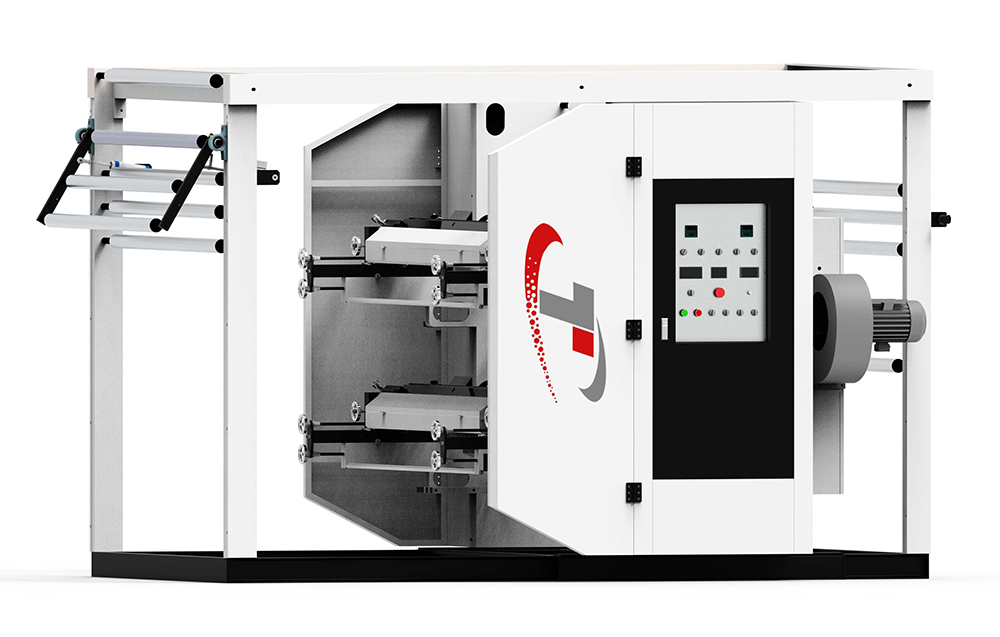
Key Configurations for Printing Machines for 2 – 8 color Output
Stack, Central Impression (CI), and Inline Presses: Trade-offs in Registration, Speed, and Footprint
In 2 to 8 color printing of paper rolls, there are 3 configurations that find the printing quality, production speed, and factory space available. Starting with stack presses, these have their printing unit stacked up to each other giving an average of ±0.5mm registration and are able to run at 600 fpm. They are more space efficient, making them ideal for printing houses where space is at a premium, especially as print runs get shorter. Then, we have central impression presses. These have a unique design whereby each of the printing stations uses a shared impression cylinder. This design eliminates web shifting for color registration and they can achieve and even exceed 1,500 fpm at a registration of ±0.1mm. However, they require 40% more floor space than stack systems. Inline presses have a unique design in that they lay all the components side by side. They provide a fair registration of ±0.3mm and can run at 1,400 fpm. A unique feature with them is the easy addition of other finishing processes like slitting or embossing in the line. This flexibility, however, comes at a cost, as they require 20 to 30% more space than stack configurations.
Press Type Registration Accuracy Max Speed Footprint Size Best Suited For
Stack ±0.5mm ≤600 fpm Compact Short runs, space limits
CI (Central Impression) ±0.1mm 1,500+ fpm Large High-precision/long runs
Inline ±0.3mm 1,400 fpm Moderate Modular/finishing needs
Critical Technical Specifications for Reliable 2–8 Color Paper Roll Printing
Precision Registration, Web Tension Control, and Drying Systems for Lightweight Paper
Getting consistent color across multiple print runs requires extremely accurate registration at the micron level around plus or minus 0.1 mm to avoid those annoying ghost images or blurry spots. This becomes even more important when working with complex 8-color stacking processes. For lighter papers under 40 grams per square meter, closed loop tension controls really make a difference because these thin materials tend to stretch out of alignment. The drying process requires a careful balance of speed and gentleness. New infrared drying technology with adjustable wavelengths dries while keeping sachets and other soft materials safe from burning, while maintaining production speeds of over 500 feet per minute. Last year's Printing Industry Report stated that improved drying techniques reduced moisture changes by 18%, decreasing the registration issues related to paper curling.
Cylinder-Less Technology vs. Traditional Anilox: Effects on Changeover Time & Color Consistency.
Cylinder-less sleeve systems save time during changeover by about 15 minutes. That is approximately 75% faster than traditional anilox rollers. With our systems, there is no need to manipulate mechanical bearings, and sleeve exchanges can be done in seconds. Our systems are especially good at handling designs and layouts where there are color shifts as they can be set as 2, 4, 6, or 8 color jobs and no recalibrating is required as all elements maintain their alignment. Our sleeves are consistent with an ink volume within ± 1.5 BCm³ during the entire run, which proves to be stable in long duration jobs. This is coupled with our innovations on the effect of heat on ink viscosity such that the effect of ink viscosity on print jobs is not as pronounced as others. Most users are comfortable with their Pantone matches with ΔE values below 2 even after hours of printing. Given the trade-offs, it is understandable to choose traditional anilox for large repeat jobs at single material printing of 50,000 linear feet.
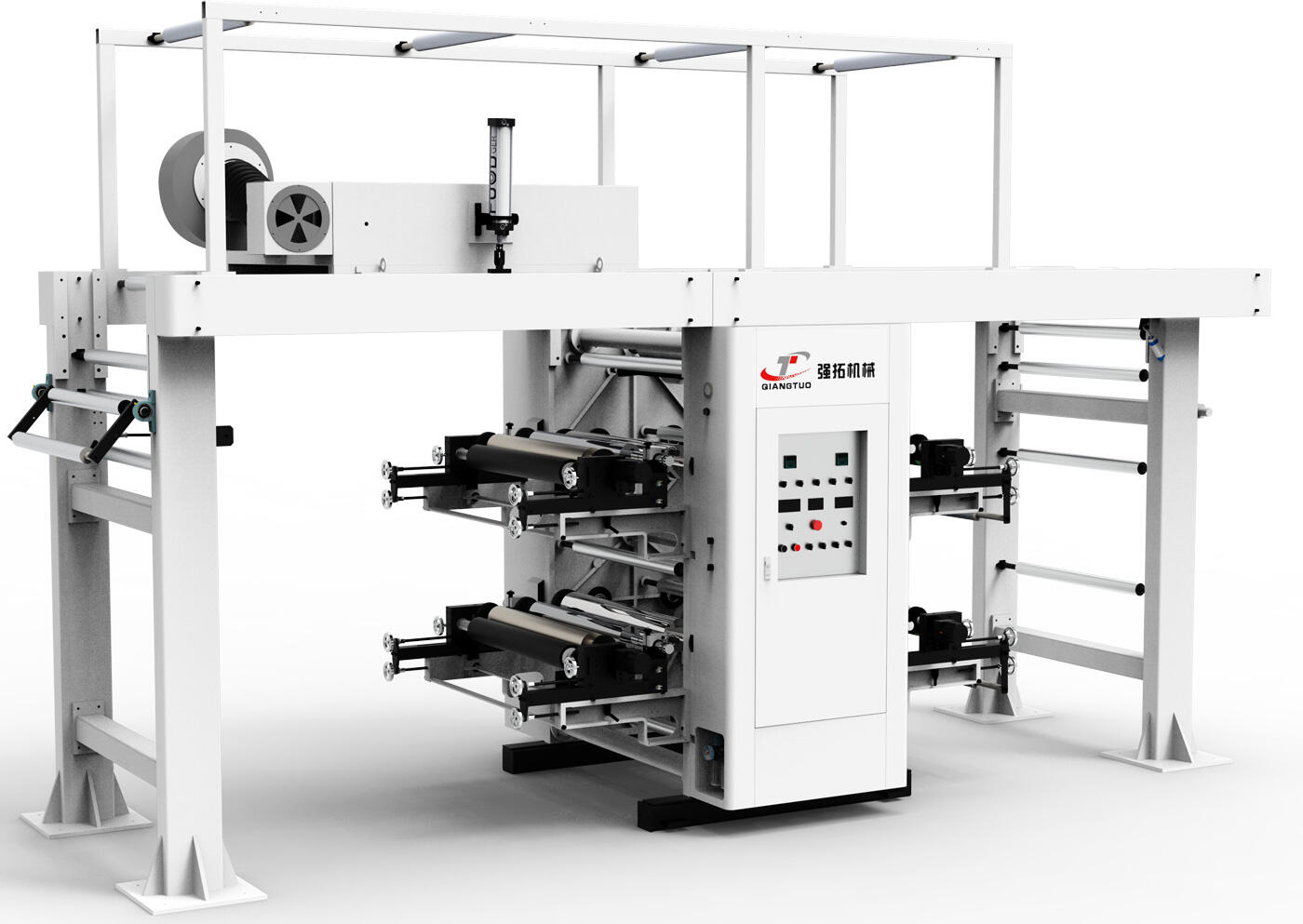
Selecting the Right Paper Roll Printing Machine: Color Capacity vs Real Life Expectations
When deciding which machine to buy, the focus needs to be on what the color capacity means in terms of unique production needs, not theoretical production extremes. Once again, industry standards tell us that with 6, 7 or 8 color units costing up to 40% more to run, while 2, 3 or 4 color units provide the lowest operating costs. Other considerations include:
Design complexity: 4 color prints may be ample for basic branding, while 6 or more units may be required for complex gradients or photo quality work
Substrate types: additional color layers may be needed If coated or otherwise opaque substrates need to be more opaque or vibrant.
Job changeover frequency: for automated registration systems to achieve <0.1 mm alignment, the automated system is an absolute must
Volume thresholds: for jobs under 8 color systems offer increases of >10,000 linear feet
Future-proofing matters: focus on modular designs that can add color units incrementally, while assuring your choice of tension control for lightweight papers (≤70 gsm) to prevent excessive web breaks during high-speed, multiple color runs.
FAQ
What is flexographic printing used for?
Flexographic printing is ideal for producing high volumes of colorful packaging, label stock and specialty papers that require vibrant and accurate color.
Why is flexography used for 2-8 color roll paper printing?
Flexography is the best option because it offers faster production speeds, more cost savings and consistent alignment and registration of all colors across units.
What are the benefits of a central impression press?
A central impression press offers exceptional registration of color in addition to high-speed production for long run and high quality printing.
An anilox roller guarantees uniform ink transfer to the printing plate, a key factor in maintaining consistent printing quality across different types of paper.