
 EN
EN
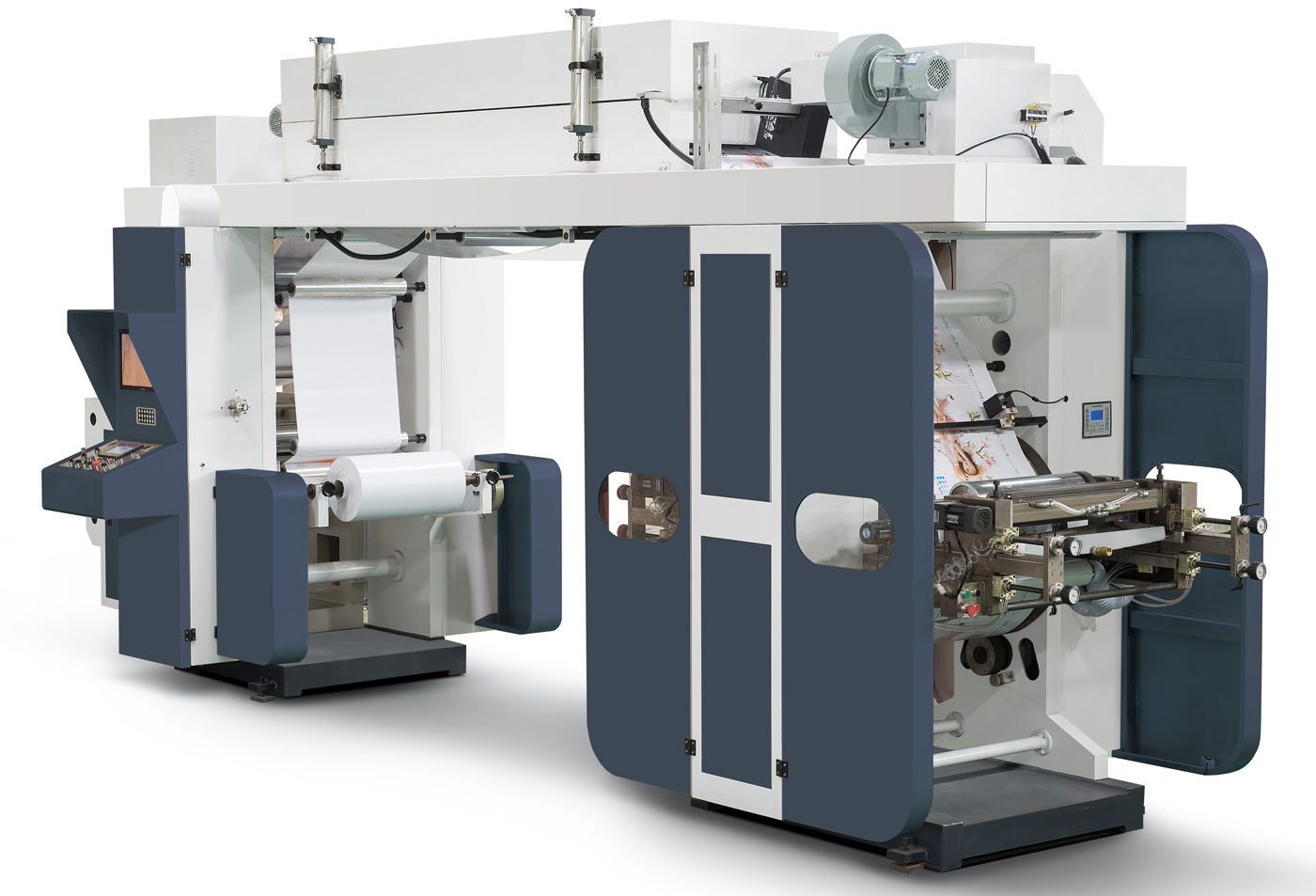
Paper roll flexo printing machines from Qiangtuo can achieve a speed of 220 to 280 meters per minute when tested under conditions set by the factory. The test is conducted using a standard paper material of 15 to 18 GSM paper while maintaining humidity of 45 to 55 % RH, temperature between 20-25 degrees Celcius, and is fully calibrated. For absorbent kraft paper of 20 GSM or heavier, the paper is needed to be slowed down by 15-20%. This is to maintain the proper alignment of the paper during printing and to ensure the ink transfers to the substrate without problems.
Key Design enablers
Two integrated engineering solutions make high-speed operation possible and viable.
Servo web control system and Tension stable unwind system. This is to prevent slipping when speed is over 200 m/min.
The tension stable unwind system has a load cell and closed loop servo control, to counter the elongation of the substrate, especially when dealing with low strength and highly absorbent papers.
All systems combined will limit cumulative registration drift to ¥0.1 mm across multi-color, full-width runs, guaranteeing consistent print quality even at the highest print speed.
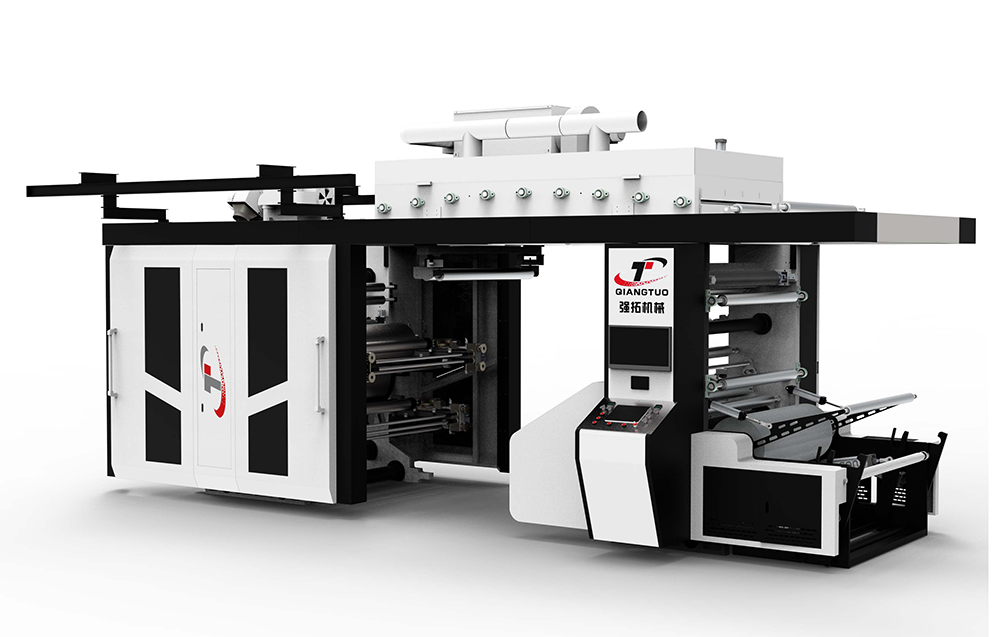
Real-World Performance of the Qiangtuo Paper Roll Printing Machines
Field Data from 12 High-Volume Packaging Facilities: Average Sustained Speed and Uptime
Data from 12 high-volume packaging plants demonstrate that Qiangtuo machines achieve an average speed of 240 meters per minute, and a 92% operational uptime. If packaging plants adhere to ISO 12647-6 and its maintenance schedule, the Qiangtuo machines will reach a high operational uptime. In plants that have a predictive maintenance system based on vibration and tension monitoring, the unexpected machine downtimes were reduced by 18% and the operational uptime averaged above 91% over 6 months. What makes this work? It is the combination of ongoing performance calibration, pre-production material screenings, and operator training.
Primary performance limiting factors: substrate, drying, and operator.
The most common primary performance limiting factors are interdependency of the substrate, drying, and operator.
Substrate: Irregular configurations of substrate materials, especially at the level of porosity and moisture (±3% deviation from target) will require operator tension and impression adjustments, reducing effective machine speed by 12-15%.
Inefficiencies with ink drying: Solvent-based inks need accurate thermal/hygrometric control. If drying is inadequate at >220 m/min, smearing occurs and speed rollback is required.
Operational expertise: Qiangtuo’s Tier-2 Operator Program Certification Technicians perform job changeovers 25% faster and achieve tighter registration control—resulting in improved throughput.
When addressed comprehensively, mitigation is most impactful: Standardized substrate testing (TAPPI T 402), infrared drying upgrade, and certified pathway frameworks increase sustainable speed repeatability.
Tradeoffs Between Speed and Quality in Flexo Printing Paper Roll Machines.speed
How Higher Speeds Affect Registration Accuracy and Dot Gain on Absorbent Paper Substrates
Running a machine faster than 200 meters per minute when printing on rough and uncoated papers such as kraft and newsprint leads to significant quality degradation. When a machine runs too fast, there is insufficient time to make appropriate contact between the printing plate and anilox roller and subsequently, the plate and the paper. This results in the production of larger printing dots, particularly in the mid-tone range, impacting the spectrum of light to dark and the sharpness of edges. Higher machine speeds also result in increased vibration in the paper path, causing an alignment deviation of 0.15 to 0.3 millimeters. Such misalignment will particularly be pronounced in the color printing of fine detail. This issue is exacerbated by the fact that absorbent papers draw and retain the printing ink within their fiber structure which is designed to print elements.
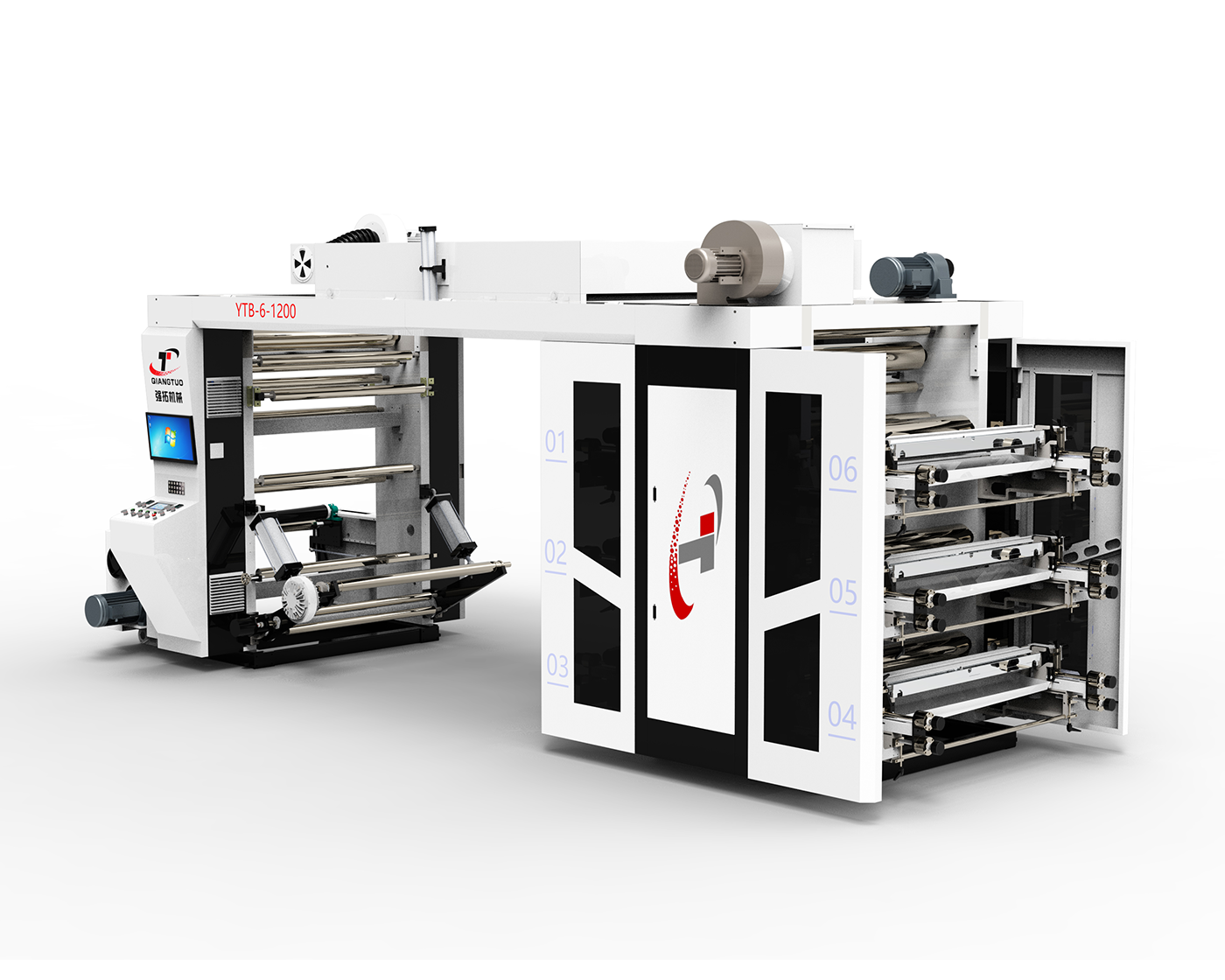
Optimizing Speed While Maintaining Print Quality: Pre-Press, Plates, and Anilox Selection Recommendations
To meet the requirement of running 240 m/min with ¥0.1 mm registration tolerance and <15% dot gain on uncoated stocks, upstream and mechanical interventions must be coordinated:
Pre-press: Use ISO 12647-6 paper specific profiles for dot gain compensation curves, keep highlight dots at 2–3%, and increase trap zone widths by 0.08–0.12 mm.
Plate engineering: Request 60-70 Shore D hardness photopolymer plates for high roller pressure and RPM deformation resistance.
Anilox: Select ceramic rolls with 60° engraving and 4–6 BCM for optimized ink metering (no overloading of porous surfaces).
Drying system: With IR pre-drying (to set the initial film viscosity) and UV-LED curing (to speed up the final polymerization), drying-related speed constraints can be reduced by up to 30%.
This combined method, validated across third party testing on 17 GSM kraft and 16 GSM newsprint, high fidelity output is repeatable at commercially viable speeds and eliminates the need for upgrades or re-engineering of processes.
FAQ
What is the best speed range for Qiangtuo paper roll flexo printing machines?
The best speed range for Qiangtuo paper roll flexo printing machines is 220 to 280 meters per minute when conditions are optimal.
What helps the machine run at such high speeds?
High speeds are achieved through tension modulation and web control driven servo and unwind systems that are tension stable.
What are the usual obstacles for keeping high speed operation of the machine?
Substrate variations, drying of ink, and operator level are some of the challenges that impact speed and quality of the print.
How can print quality be improved while maintaining high speeds?
Quality of print can be improved while maintaining high speed by optimizing pre-press activities, selecting appropriate anilox rollers and plates as well as drying systems that are high speed.