 EN
How Fast Can Sleeve-Type Plate Cylinders Cut Job Changeover Time on Your woven bag printing machine?
A production manager asking this question usually wants one number. A responsible answer is more useful: a sleeve-type plate-cylinder arrangement can remove handling steps from a changeover on a woven bag printing machine, but no credible fixed number applies before the job is defined. Repeat length, plate mounting practice, artwork, ink preparation, web behavior, registration targets, and the team’s release process all shape the elapsed time.
For a woven bag printing machine, the practical comparison is not “sleeves versus cylinders” in isolation. It is the time from the last acceptable bag of one order to the first approved bag of the next. That window includes preparation, tooling exchange, setup checks, registration, tension stabilization, color adjustment, and first-off inspection. Looking at all of those steps prevents a fast physical swap from being mistaken for a finished changeover.
Start with the right definition of changeover time
Before evaluating a Sleeve-Type woven bag printing machine, write down where the clock starts and stops. One plant may start timing when the previous roll ends; another may start after the next substrate is already staged. One team may stop after plates are fitted; another stops only after an approved sample is signed off. Both measurements can be useful, but they are not interchangeable.
For a woven bag printing machine, separate the process into visible stages:
- Prepare the next job: confirm substrate, artwork, inks, repeat, and operating instructions.
- Remove or exchange the current plate-cylinder or sleeve tooling.
- Set the next repeat and check mechanical fit.
- Thread and stabilize the web at the intended job conditions.
- Bring colors and registration into the agreed inspection window.
- Run and approve the first acceptable sample.
A sleeve may reduce the handling burden in the second stage. It does not automatically shorten every other stage on a woven bag printing machine.
Where sleeve-type plate cylinders can help
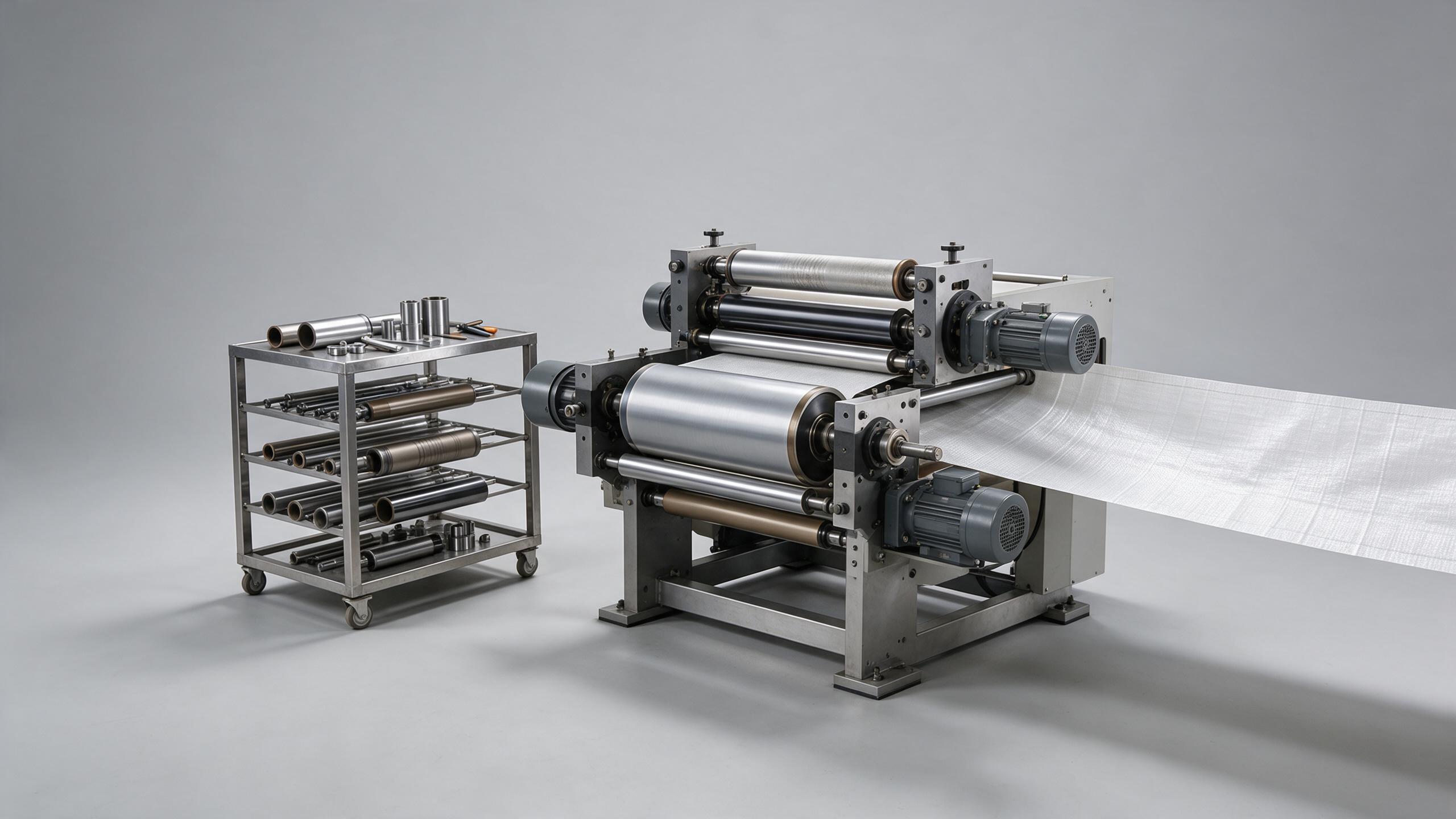
The appeal of sleeve tooling is practical: when the next sleeve, plate, and job documentation are prepared correctly, the operator can focus on exchanging the print-form assembly rather than rebuilding a setup from scattered components. On a woven bag printing machine that changes repeats or designs frequently, this may simplify the physical part of the job handoff.
That is especially relevant when job variety is high. A Quick Changeover PP Woven Sack Printer should be evaluated against the actual mix of repeat lengths, color counts, and bag constructions—not against a headline promise. If the same few jobs run for long periods, tooling exchange may be a smaller share of total production time. If a plant switches designs often, disciplined staging and clear sleeve identification can become more important.
The possible advantage is therefore conditional. A sleeve system can make a changeover easier to standardize, but it still requires a compatible press design, suitable tooling, trained operators, and an approved method for checking repeat and registration.
Why the plate swap is not the whole answer
It is tempting to treat this as a speed question; more accurately, it is a speed-and-stability question under the intended bag-printing conditions. A woven bag printing machine may lose time after the sleeve is installed if the incoming web behaves differently, the job has tighter registration expectations, or the next design needs more color balancing.
Woven substrates can make this distinction important. Material details, print coverage, ink system, web path, and tension settings should be confirmed for the specific job. A registration correction can also interact with web tension, so the goal is not merely to reach register once. The goal is to establish a stable run that can pass the plant’s inspection process without repeated adjustment.
For that reason, a comparison should include setup waste, operator intervention, and repeatability alongside elapsed minutes. These are operating questions, not universal performance claims about a woven bag printing machine.
A practical test for your woven bag printing machine
If you are assessing a sleeve-type approach, use comparable live jobs rather than assumptions. Choose representative orders that differ in repeat, artwork complexity, substrate, and number of colors. Keep the timing rule consistent. Record each step from job preparation through approved first-off, plus any material used during setup.
| Check point | What to record | Why it matters |
|---|---|---|
| Job preparation | Availability of sleeves, plates, inks, and instructions | Shows whether delays occur before the press is touched. |
| Tooling exchange | Safe removal, fitting, and identification checks | Isolates the part a sleeve system is intended to streamline. |
| Web and tension setup | Adjustments needed before a stable run | Connects changeover performance to the actual woven material. |
| Registration and color | Number and cause of corrections | Prevents a fast swap from hiding a slow approval process. |
| First-off approval | Time to agreed sample acceptance | Captures the point at which the job is commercially usable. |
Use the same checklist for the current arrangement and the proposed Sleeve-Type woven bag printing machine. The result will not create a generic benchmark, but it will show whether the tooling change is a meaningful bottleneck in your own workflow.
Questions to settle before requesting a configuration
A supplier discussion about a woven bag printing machine is more productive when the production team provides the facts that change the recommendation. Include the bag material, web width, repeat range, typical color count, artwork coverage, ink and drying requirements, job-change frequency, current changeover sequence, acceptance criteria, and the operator tasks that consume the most time.
Ask which elements of the proposed arrangement are included, which conditions must be validated, and what handling or maintenance routine the team will need. This may be the right direction, but the answer depends on the confirmed material, workflow, and configuration scope.
Use a workflow decision, not a headline number
For a woven bag printing machine, sleeve-type plate cylinders may be worth investigating when frequent repeat or design changes make tooling handling a recurring constraint. They should not be presented as a preset promise of a particular time reduction. The stronger business case comes from a documented before-and-after test that accounts for preparation, exchange, stabilization, approval, waste, and labor.
For broader application context, see woven bag printing machine application guidance. Wenzhou Qiangtuo Machinery can use your job details to frame the relevant configuration questions, while the final suitability still needs confirmation against the intended production conditions.
 Hot News