
 EN
How Do Ceramic Anilox Rollers and Chamber Doctor Blades Improve woven bag printing machine Print Quality?
On a woven bag printing machine, print quality is not decided by the plate alone. The ink film must arrive at the plate in a controlled, repeatable way while a textured PP woven substrate moves through the press. That is why the anilox-and-doctoring system deserves attention whenever solid areas look uneven, fine type fills poorly, or one colour changes during a run.
From an operator’s viewpoint, the useful question is not whether a ceramic roller or enclosed chamber is automatically right for every job. It is what each part controls, what evidence to inspect, and which production conditions must be confirmed. For a stable bag material and repeat pattern, this comparison can be useful; when either changes, confirm the configuration again.
Why ink metering matters on a woven bag printing machine
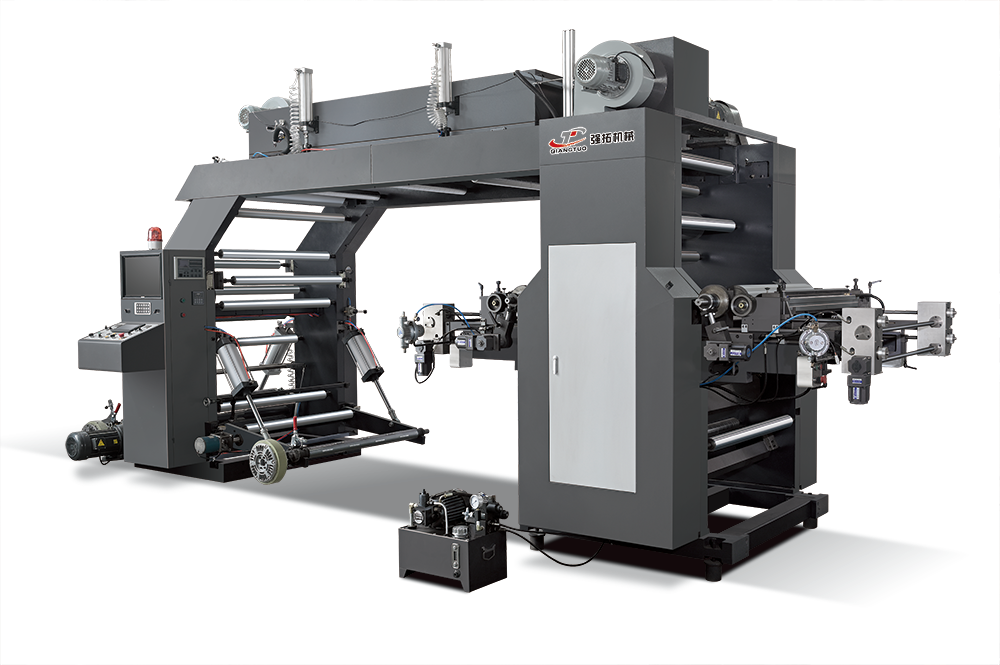
A flexographic woven bag printing machine transfers ink in stages: the chamber supplies ink, the anilox cells carry a measured volume, the plate receives that ink, and the plate prints onto the bag. The anilox is therefore not simply a roller. Its cells are the metering surface that sets the starting ink film for each colour station.
Woven substrates add practical variables. Surface texture, yarn pattern, coating condition, web tension, artwork coverage, ink behaviour, plate selection and drying all influence the visible result. If a woven bag printing machine shows a weak solid, it is tempting to increase ink or pressure immediately. That can hide the original issue and make gain, dirty edges or drying inconsistency harder to assess.
A better sequence is to separate supply, metering, transfer and impression. First ask whether the ink reaches the chamber consistently. Then ask whether the cells are clean and uniformly metered. Next review plate contact and registration. Finally, check how the bag surface and web path react under the intended production conditions.
What a ceramic anilox roller changes
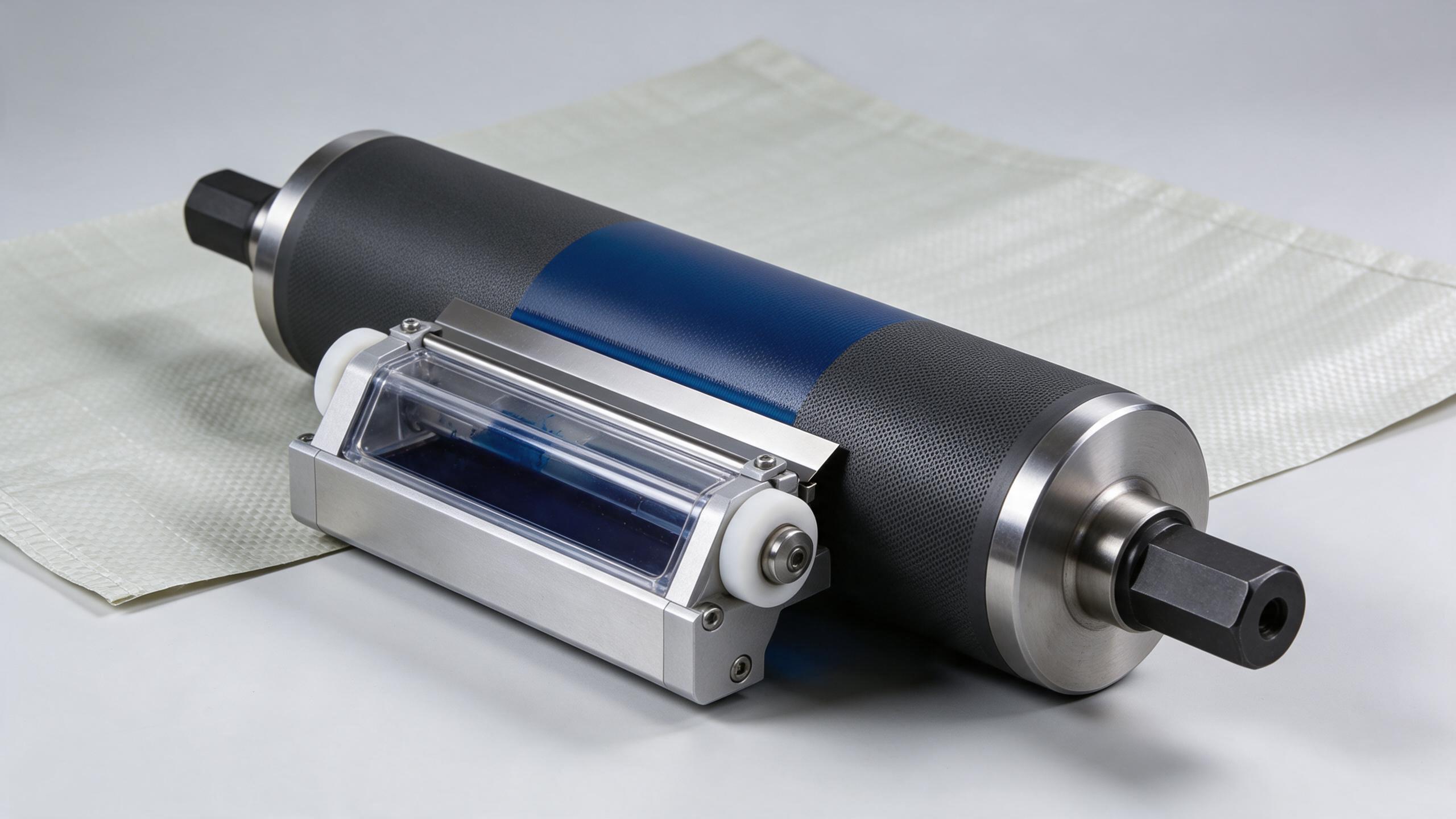
A Ceramic Anilox woven bag printing machine setup uses a ceramic-surfaced anilox roller whose engraved cells retain ink after excess surface ink is removed. The practical benefit is control: when cells are clean, undamaged and matched to the ink, plate and artwork, the press begins each impression with a more consistent ink supply than an uncontrolled film on the roller surface.
That does not make cell volume a stand-alone answer. A finer image, a large solid, a coarse woven texture and a change in ink viscosity may require different process choices. On a woven bag printing machine, the operator should compare the target artwork with the cell specification, plate design and substrate before interpreting a print defect as a roller problem.
Look for symptoms rather than guessing. Patchy solids can point to contamination or incomplete cell filling; excessive surface ink can point to poor metering; recurring bands may require inspection of the roller, chamber contact, plate or web path. Record the colour station, artwork area, ink condition and point in the run where the defect appears. That small record makes controlled adjustment easier than relying on memory.
How a chamber doctor blade supports controlled metering
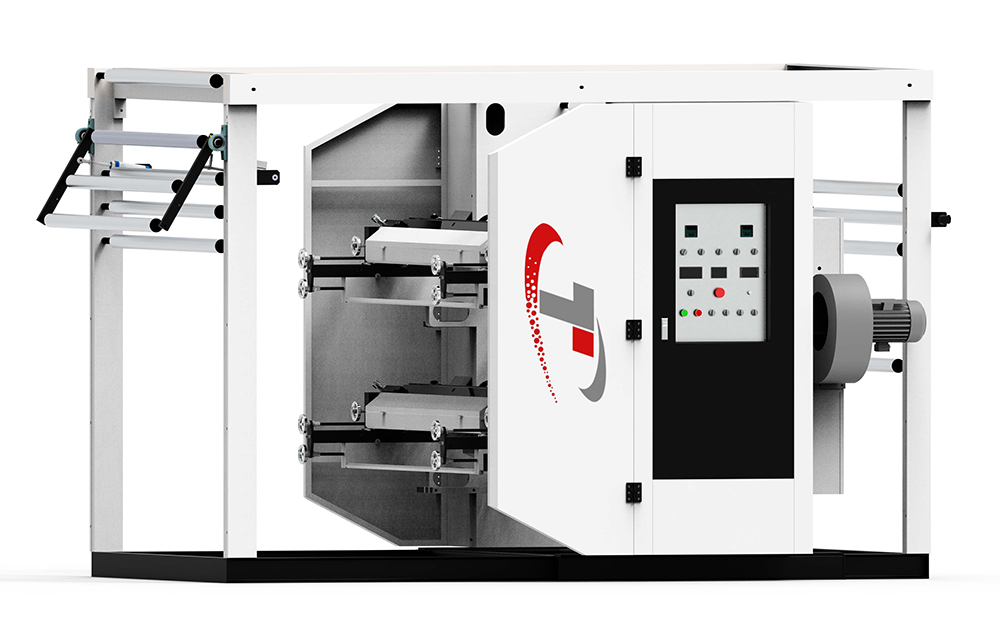
A Chamber Doctor Blade PP Woven Sack Printer arrangement encloses the ink supply at the anilox and uses doctor blades to meter the roller surface. In flexographic printing, the metering blade removes excess ink from the anilox surface before the roller inks the plate. The goal is not to force more ink onto the bag; it is to leave a controlled amount in the cells for transfer.
For a woven bag printing machine, that control can be relevant when the job calls for stable colour appearance across a run. A chamber can also make the ink path easier to review as a system: supply, seals, blade condition, contact, return flow and cleaning practice each have a visible role. But blade loading, angle, material compatibility and maintenance procedure must be confirmed for the actual press and ink system.
Inspect the blade and seal condition before treating a density shift as an artwork issue. A worn edge, uneven contact, dried ink or a leak can change how the roller is metered. When a defect begins after cleaning or changeover, retrace that work first. This is often more useful than making several unrelated adjustments to a woven bag printing machine.
Why the roller and chamber work as a pair
The ceramic anilox roller and chamber doctor blade address different parts of the same control loop. The roller carries ink in measured cells; the chamber supplies ink and meters the roller surface. Used as a pair on a woven bag printing machine, they can make it easier to distinguish an ink-film issue from a plate, impression, registration or substrate issue.
Consider a hypothetical bag job with a large colour panel and small reverse text. If the large panel looks mottled while the reverse text remains readable, inspect anilox cleanliness, chamber metering and ink condition before changing the plate. If text spreads after ink-film changes, review the whole transfer chain rather than assuming the roller is at fault. The visible defect is only the start of the diagnosis.
A practical check sequence for print-quality complaints
- Define the defect. Note the colour, artwork area, bag material, run stage and whether the issue is repeatable.
- Review ink supply. Confirm the ink condition and whether the chamber is feeding and returning ink as expected.
- Inspect the metering contact area. Check blade edge, seal condition, contact consistency and signs of dried material.
- Inspect the anilox. Review cleanliness and any visible damage; use the site’s established inspection method rather than assuming cell condition.
- Verify downstream variables. Review plate condition, mounting, impression, registration, web tension and drying before making a conclusion.
- Change one relevant variable at a time. Compare the next sample against the documented starting condition.
This order helps the team avoid treating a woven bag printing machine as a single-variable system. The question is not only whether the press can print the bag, but what must be confirmed for that specific job to run as intended.
Questions to include in a technical review
Before specifying or revising a woven bag printing machine, share the bag construction, coating or surface condition, ink system, artwork coverage, colour expectations, repeat layout, job-change pattern and current defect samples. Also ask how the anilox is cleaned, how chamber blades are changed, and who verifies roller condition. Those inputs create a clearer basis for checking whether a Ceramic Anilox woven bag printing machine arrangement and chamber doctoring approach fit the production workflow.
For procurement, maintenance and production teams, the useful outcome is a controlled discussion rather than a broad claim. A woven bag printing machine can be assessed through its ink path, web path and routine checks. When the roller, chamber, plate and substrate are reviewed together, print-quality decisions become more traceable and adjustments can be tested with less ambiguity.
 Hot News