
 EN
EN
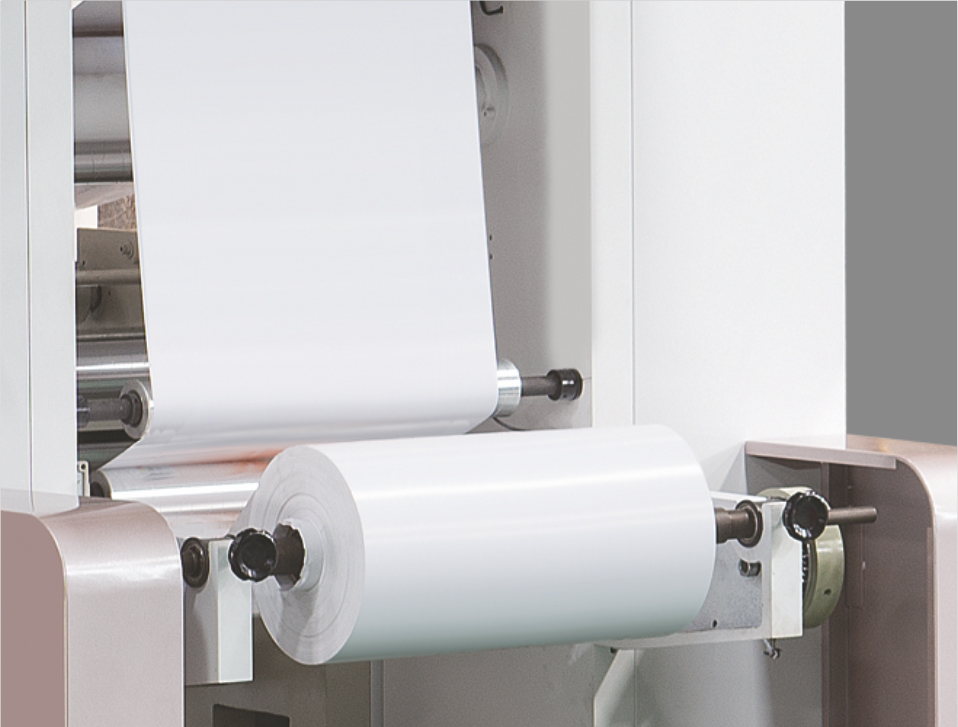
The 15,000-Bag Rework – A Registration Nightmare Solved
A large paper bag manufacturer in Southeast Asia was losing money on a high-value order for a global coffee brand. The job required 8 colors on a 70 gsm kraft paper, but their stack press couldn't maintain register beyond 2,000 bags. Misregistration drifted as much as 0.4 mm, turning the brand's crisp logo into a fuzzy shadow. After 15,000 bags of wasted production, the job was halted.
The solution was a fundamental change in press architecture. Switching to a Central Impression (CI) press with advanced servo-driven controls and a precision-ground central drum locked the thin, stretchy paper to a fixed path. Within hours, registration was stable at ±0.1 mm across the entire 100,000-bag run. The job was completed on time, and the rework disaster became a case study in the value of the right technology.
This experience is not unique. Over the past decade, our team has observed that many registration issues blamed on ink, plates, or operator error, are in fact rooted in the press's mechanical inability to handle the substrate. Understanding why CI architecture is essential for stable color registration isn't just about a machine; it is about understanding the physics of the web itself.
Why CI Architecture Wins – The Physics of Substrate Stability
The core mechanical advantage of a Central Impression (CI) paper bag printing machine lies in its massive, precision-ground central drum. Unlike stack or inline architectures, this single cylinder anchors the substrate throughout the entire multi-color print process. It holds the paper tightly against a fixed arc without release, eliminating web movement or distortion between color stations—the leading cause of misregistration.
This geometric stability locks substrate tension. Integrated drum temperature control prevents thermal expansion from altering print pressure during long runs. The result is a rigid mechanical platform capable of maintaining registration accuracy within ±0.1 mm—even on thin, extensible kraft paper at high speeds. For brand-critical paper bag production, that anchored pathway delivers crisp, layered graphics with minimal setup waste.
CI vs. Stack vs. Inline – A Performance Reality Check
When evaluating press architectures for high-speed paper bag printing, CI design consistently outperforms stack and inline configurations in registration stability and speed capability. Stack presses rely on independent vertical stations that struggle to manage tension on lightweight substrates, making fine registration inherently unstable. Inline presses introduce multiple tension zones across widely spaced units, limiting effective speed for precision work.
| Feature | CI Press | Stack Press | Inline Press |
|---|---|---|---|
| Registration Accuracy | Excellent (±0.1mm) | Moderate | Good |
| Max Speed Capacity | High (300+ m/min) | Low-Moderate | Moderate-High |
| Substrate Stability | Locked to central drum | Prone to flutter | Multiple tension zones |
| Ideal Application | Thin, stretchy, high-quality bags | Thick stock, basic work | Extended drying jobs |
CI presses reverse inherent limitations: by fixing the web to one drum and arranging print units compactly around it, the distance between colors shrinks to mere inches. This enables sustained operation at 200–350 m/min without compromising registration integrity. For commercial paper bag production demanding flawless brand graphics, CI architecture remains the definitive standard for balancing speed, consistency, and registration fidelity.
The Control Systems Behind the Accuracy
Achieving precise multi-color registration on a paper bag printing machine at high production speeds depends on tightly integrated mechanical and control subsystems. Two foundational areas—substrate handling and real-time registration adjustment—work in concert.
Substrate Handling: Tension, Flatness, and Edge-Guiding
Consistent substrate transport is the foundation. A paper bag printing machine must manage variable web properties—such as caliper, surface friction, and moisture content—without introducing stretch or lateral drift. Vacuum-assisted suction belts grip the web evenly across its width, maintaining a flat, stable path. Closed-loop load cells continuously monitor tension and feed data to a controller that dynamically adjusts brake or nip pressures, minimizing fluctuations that cause color shift. Optical edge-guiding sensors detect lateral movement and trigger steering frames to correct web wander to within ±0.1 mm, ensuring each color station prints precisely where intended.
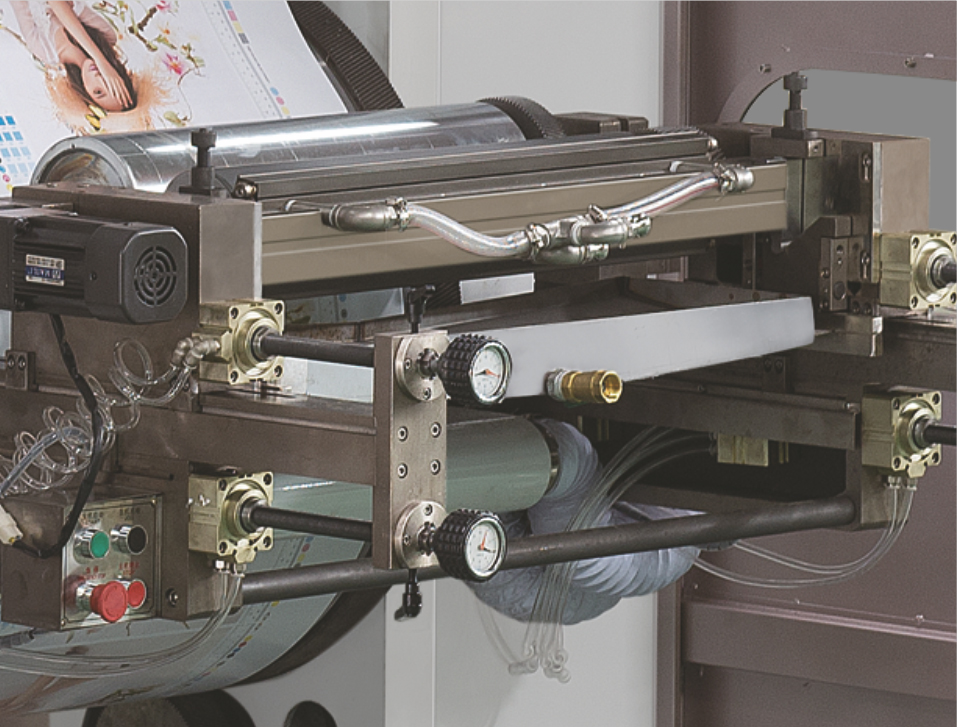
Real-Time Registration Adjustment: Servo-Driven Stations
Once the web is stabilized, maintaining registration at speed demands instant, synchronized correction. Servo-driven print stations replace legacy gear trains, allowing independent angular phase adjustment for each color deck. High-resolution encoders feed position data to a central motion controller, which compares printed registration marks at microsecond intervals. Optical sensors read those marks on the moving web; if deviation exceeds tolerance, the controller commands the plate cylinder's servo motor to accelerate or decelerate—realigning within a single impression. This closed-loop feedback compensates for substrate stretch, ink tack variations, and speed changes without stopping the machine.
Ink Transfer Optimization – The Third Pillar of Consistency
In high-speed paper bag production, consistent color density relies on precise, repeatable ink transfer from anilox to substrate. Success hinges on three interdependent elements: anilox roll selection, chambered doctor blade integration, and ink rheology management.
Anilox roll cell geometry—volume, line screen, and engraving depth—must be matched to both ink formulation and substrate characteristics to deliver uniform film thickness. A chambered doctor blade system ensures clean, controlled ink metering across the full print width, eliminating streaks and contamination. Equally critical is maintaining optimal ink viscosity: fluctuations cause dot gain, fill-in, or faded solids. Modern automated viscosity controllers adjust solvent or water content in real time, locking in consistent density.
| Process Variable | Impact on Quality | Control Method |
|---|---|---|
| Substrate Tension | Stretch → Misregistration | Closed-loop load cells |
| Print Speed Variation | Phase shift → Color drift | Servo-driven phase correction |
| Ink Viscosity | Dot gain / Fading | Automated viscosity controller |
| Anilox Volume | Inconsistent film thickness | Matched roll spec |
Validating Print Quality – Beyond the First 100 Bags
Validating the output of a paper bag printing machine requires moving beyond visual inspection of a single sample. True registration stability is confirmed only through repeatability analysis across the full production run under commercial conditions.
Begin by isolating variables that degrade registration over extended runs: thermal expansion of plate cylinders, inconsistent web tension from diminishing roll diameters, and microscopic ink viscosity shifts. Requesting a continuous print sample of at least 2,000 bags—not a curated proof—exposes latent instabilities. Measure lateral and circumferential registration drift using the first bag as the master reference; a stable system maintains alignment within ±0.1 mm from start to finish.
Functional validation is equally essential. Ink adhesion must withstand real-world stresses: perform a tape test per ASTM D3359 to verify ink film integrity on porous kraft paper. Also subject validated samples to load testing—filling bags with typical contents—to confirm creasing and stretching do not crack ink or distort graphics. Only when both dimensional accuracy and functional durability are verified does the printed bag fully meet brand and operational requirements.
When the Printing Line Meets the Finishing Line – The Integrated View
A CI press delivers exceptional registration, but its value is fully realized only when integrated with efficient downstream finishing. BXKM understands this holistic flow. The company's expertise in auxiliary equipment for plastics processing—including pelletizing, mixing, and conveying—extends to supporting the entire production ecosystem. By supplying robust material handling and recycling solutions, BXKM ensures that the paper or plastic substrate entering the press is consistent, and that the waste generated is effectively reprocessed. This comprehensive support, backed by a global supply chain, helps bag manufacturers achieve maximum uptime and part quality, complementing the precision of the CI press itself.
FAQ
| Question | Answer |
|---|---|
| What is the main advantage of a Central Impression (CI) press? | Its precision-ground central drum keeps the substrate stable and tightly anchored, ensuring high registration accuracy (±0.1mm). |
| How does CI architecture compare to stack and inline presses? | CI presses provide superior registration accuracy, speed, and substrate stability, making them ideal for high-speed, high-quality bag production. |
| What role do servo-driven print stations play in CI presses? | They enable precise, real-time corrections to maintain multi-color registration stability at high speeds. |
| How is consistent color density maintained? | Through correct anilox roll selection, chambered doctor blades, and automated ink viscosity controls. |
| Why is substrate handling critical for registration stability? | Consistent transport ensures web tension and flatness, reducing color shifts and misregistration. |
| How is print quality validated for commercial production? | Through repeatability tests (lateral/circumferential registration checks), ink adhesion tape tests (ASTM D3359), and load testing with typical contents. |