 EN
EN
The 3‑Shift, No‑Stop Run – A Production Reality Check
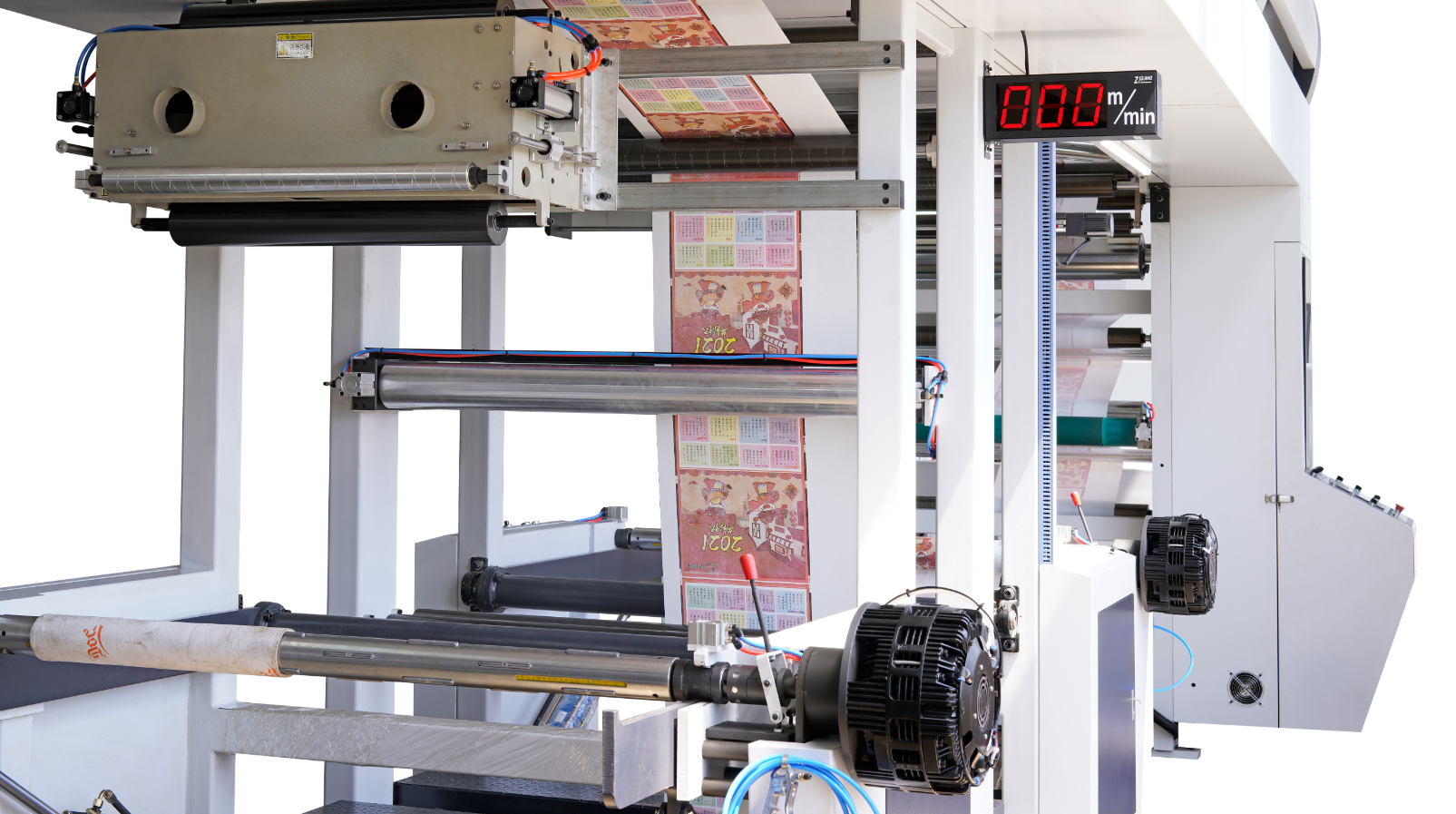
A packaging plant in Vietnam was skeptical when their new CI flexo woven bag printing machine was rated for 4+4 color printing at 260 m/min. Their previous stack press couldn't hold register beyond 180 m/min on woven PP without frequent adjustments. They decided to put the new machine to a real test: a 72‑hour continuous production run on corona‑treated woven PP. The result? The press ran at 252–258 m/min for three full shifts, maintaining ±0.10 mm registration throughout. Setup waste was under 300 meters—one‑third of their usual scrap rate. No unplanned stops occurred. Color consistency met brand‑standard Delta E < 2.0 across all 72 hours.
This experience is not an outlier. Over the past five years, our team has observed a fundamental shift in what's achievable with modern CI flexo technology on woven substrates. Understanding the technical feasibility of 4+4 color printing isn't just about machine specifications; it is about understanding the integrated system—print stations, tension control, and substrate handling—that makes high‑speed, multi‑color woven bag production commercially viable.
Why 4+4 on CI Flexo Works for Woven Substrates
A CI (central impression) flexo woven bag printing machine delivers simultaneous front and back multicolor output via a 4+4 color setup. Eight printing stations are arranged symmetrically around a large, temperature‑controlled central drum: four print the web's top side, while the other four—activated after the substrate passes through a precision turn‑bar system—print the reverse.
This single‑pass operation eliminates offline side‑switching and significantly improves registration consistency. On porous, stretch‑prone woven polypropylene (PP) or high‑density polyethylene (HDPE), the drum's rigid surface stabilizes the web against elongation, enabling positional accuracy within ±0.10 mm. Ink transfer relies on precisely mounted photopolymer plates on sleeves and high‑line‑screen anilox rolls (300–500 LPI), which meter a thin, uniform ink film—critical for sharp halftones and solid coverage without bleeding into the weave.
Critical Hardware – The Three Pillars of 4+4 Performance
Achieving reliable 4+4 color performance hinges on three interdependent hardware pillars.
| Hardware Component | Specification | Why It Matters |
|---|---|---|
| Color Stations | 8 independent, servo‑driven, symmetrically mounted | Enables independent phase adjustment; closed‑loop inking |
| Anilox Rolls | Laser‑engraved ceramic; 300–500 LPI; runout <0.005mm TIR | Prevents banding and flooding on textured surfaces |
| Plate Mounting | Sleeve‑based cylinders; compressible cushion tapes; mechanical/pneumatic clamps | Dampens vibration; limits longitudinal strain to <0.3% |
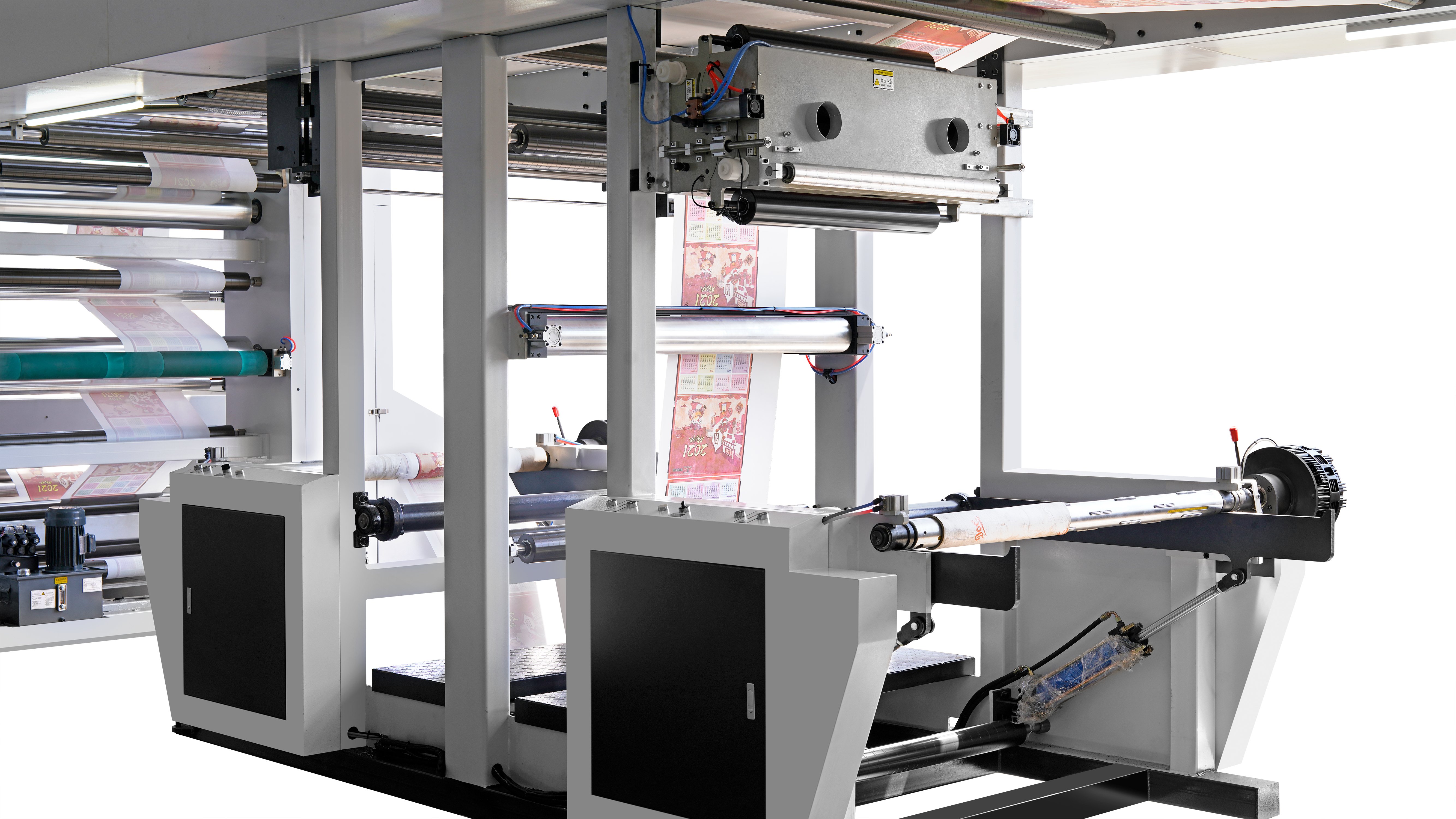
First, eight independent, servo‑driven color stations must be symmetrically mounted around the CI drum, each equipped with closed‑loop, doctor‑blade‑chambered inking systems to maintain ink viscosity within tight limits. Second, anilox rolls require laser‑engraved ceramic surfaces with consistent cell volume (4.0–6.0 BCM) and high line counts—plus runout held below 0.005 mm TIR. Third, tension‑stable plate mounting demands sleeve‑based cylinders paired with compressible cushion tapes that dampen vibration at speed. Integrated dancer rollers and load‑cell feedback enable dynamic, zone‑specific tension control—essential for maintaining web flatness across the full 8‑station path.
High‑Speed Performance – Can It Sustain 260 m/min with 4+4 Colors?
Registration Stability Limits
At 260 m/min, registration stability—not raw speed—is the defining constraint for 4+4 color printing on woven substrates. Even minor tension‑induced fluctuations can cause misregister beyond acceptable limits, especially on porous, non‑uniform woven PP or HDPE. Modern CI flexo presses address this with direct‑drive plate cylinders and real‑time automatic register control, using high‑resolution optical sensors and predictive compensation algorithms to adjust for micro‑stretch variations.
During 2023 validation trials, 4+4 configurations consistently maintained ±0.10 mm registration over 8‑hour runs at speeds between 240 and 260 m/min—meeting the threshold needed to avoid halos and color bleed on textured surfaces. Without sub‑millimeter control, multi‑color image integrity degrades rapidly, pushing waste rates above 5%.
| Speed Range | Registration Accuracy | Waste Rate (Typical) |
|---|---|---|
| 180–200 m/min (Stack Press) | ±0.30–0.50 mm | 8–12% |
| 200–240 m/min (CI Flexo) | ±0.15–0.20 mm | 4–6% |
| 240–260 m/min (CI Flexo, 4+4) | ±0.10 mm | 2–3% |
Web Tension Management Across Extended 8‑Station CI Paths
Woven PP and HDPE substrates pose a dual challenge: porosity limits ink holdout, while inherent elasticity (2–4% stretch under modest tension) threatens dimensional stability over long CI paths—up to 15 meters across eight stations. Effective tension control must operate within a narrow window (80–120 N) to prevent bag‑length variation and register drift. Advanced systems deploy load‑cell–guided dancer rollers before and after the CI drum, enabling proactive, closed‑loop adjustments. A 2022 engineering institute study confirmed such systems reduce web strain variation to under 1.5% across all stations—even at 260 m/min. Without this integrated tension architecture, consistent 4+4 output at high speed would be unattainable on woven substrates.
Real‑World Validation – Field Performance Data
A leading Vietnamese packaging converter recently validated 4+4 CI flexo performance in continuous operation: an 8‑color CI flexo woven bag printing machine ran corona‑treated woven PP for 72 uninterrupted hours at 252–258 m/min.
| Performance Metric | Result | Industry Benchmark |
|---|---|---|
| Average Speed | 252–258 m/min | 240 m/min (typical) |
| Registration Stability | ±0.10 mm | ±0.15 mm (acceptable) |
| Setup Waste | <300 meters | 800–1,000 meters |
| Color Consistency (Delta E) | <2.0 | <3.0 (brand standard) |
| Unplanned Stops | 0 | 2‑3 per shift (typical) |
Central impression geometry held registration steady despite changing reel diameters and ambient humidity shifts. No unplanned stops occurred, and color consistency met brand‑standard Delta E < 2.0 across all 72 hours. This field evidence confirms that 260 m/min is not just a lab benchmark—it's a repeatable, commercially sustainable target for well‑specified CI flexo woven bag printing machines.
Future‑Proofing Your Woven Bag Printing Machine Investment
Investing in a CI flexo woven bag printing machine capable of 4+4 colors at 260 m/min is fundamentally about strategic resilience—not just throughput. As demand grows for high‑definition, multi‑color packaging on lightweight PP and HDPE woven substrates, an eight‑station CI platform delivers essential versatility: seamless switching between 4+0, 4+4, and extended gamut workflows without hardware retrofitting.
| Future‑Ready Feature | Benefit |
|---|---|
| Modular architecture | Supports inline coating, digital inspection, cold foil |
| Closed‑loop color management | Spectrophotometric feedback for Delta E consistency |
| Open‑architecture controls | OPC UA‑compliant; integrates with MES |
| Real‑time OEE dashboards | Enables predictive maintenance; boosts OEE by up to 12% |
But true future‑readiness extends beyond print capability. Prioritize modular architectures that support inline coating, digital inspection, or cold foil units; closed‑loop color management with spectrophotometric feedback; and compatibility with next‑generation low‑stretch, high‑tensile‑weave materials. Equally critical is the machine's digital backbone—open‑architecture controls, OPC UA–compliant data interfaces, and real‑time OEE dashboards enable predictive maintenance and integration with plant‑wide MES platforms. Selecting these attributes ensures your woven bag printing machine remains a scalable, profit‑generating asset well into the next decade.
When the Printing Line Meets the Finishing Line – The Integrated View
A CI press delivers exceptional registration, but its value is fully realized only when integrated with efficient downstream finishing. BXKM understands this holistic flow. The company's expertise in auxiliary equipment for plastics processing—including pelletizing, mixing, and conveying—extends to supporting the entire production ecosystem. By supplying robust material handling and recycling solutions, BXKM ensures that the substrate entering the press is consistent, and that waste generated is effectively reprocessed. This comprehensive support, backed by a global supply chain, helps bag manufacturers achieve maximum uptime and part quality, complementing the precision of the CI press itself.
FAQ
| Question | Answer |
|---|---|
| What is a 4+4 configuration on a CI flexo press? | It's a setup with eight print stations—four for the top side and four for the reverse—enabling simultaneous front/back printing in a single pass. |
| Can a CI flexo press sustain 260 m/min with 4+4 colors? | Yes. With advanced tension management and real‑time register control, modern CI presses maintain ±0.10 mm registration at 240–260 m/min. |
| What hardware is critical for reliable 4+4 performance? | Eight servo‑driven color stations, precision anilox rolls (300–500 LPI, <0.005mm runout), and tension‑stable plate mounting systems. |
| Why is tension control important on woven substrates? | Woven PP/HDPE are stretch‑prone (2–4% elongation). Tension control prevents bag‑length variation and register drift. |
| How does 4+4 CI flexo compare to stack press performance? | CI flexo delivers tighter registration (±0.10 mm vs. ±0.30–0.50 mm), higher speeds (260 vs. 180 m/min), and lower waste (2–3% vs. 8–12%). |
| What does "future‑proof" mean for a woven bag printing machine? | Modular architecture, closed‑loop color management, and open‑controls for MES integration—enabling adaptability to new substrates and workflows. |