
 EN
EN
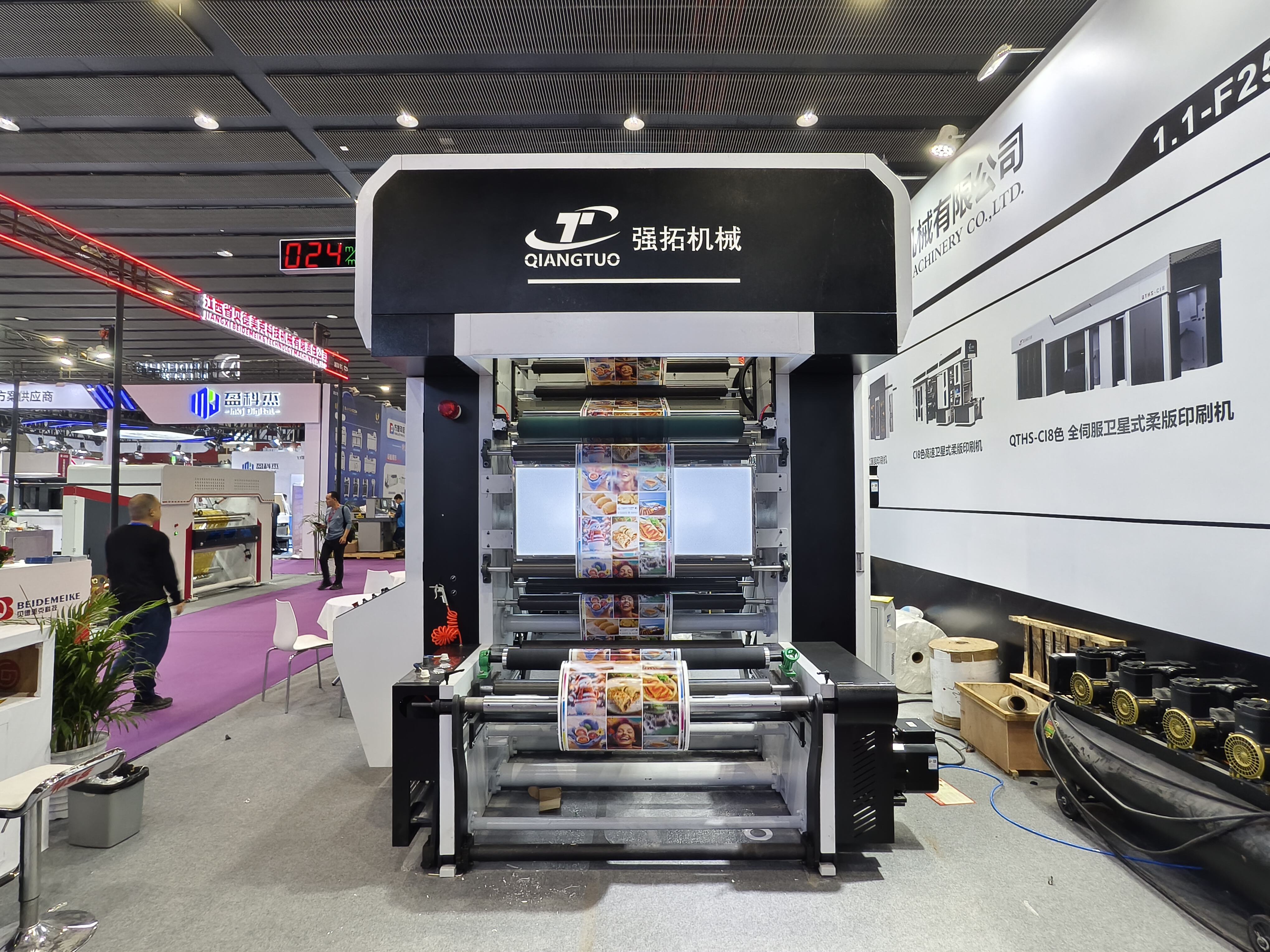
Features for Core Stability Address Reliable Functioning in a Range of Applications
CI Drum Design: A Symbol of Engineering Excellence in Mechanical Stability for Mixed-Substrate Applications
The CI (Central impression) drum design creates the foundation for the flexo printing machine’s stability in printing processes and minimizes the effects of deflection at high operating speeds. The single drum and cylinder design of the CI drum creates a mechanical linkage for all printing stations, allowing synchronization on a thermally stabilized steel core, and in this way, eliminates the potential for cumulative misalignment and mis-registration errors, which may be found in stack type presses. The design eliminates the potential for vibration induced ghosting and variability in ink transfer, as printing is switched back and forth between flexible thin films (≤40 µm) and thick, rigid corrugated boards (≥350 gsm) substrates. The leading flexo drum manufacturers produce alloy drums, processed and surfaced to ±5 µm concentricity tolerances and rigorously verified, per the specification of ISO 12647-2:2013. Monolithic design, and mechanically integrated structure, creates a uniform and even distribution of web tension across all integrated printing units, and this is a design feature that is mandatorily present to ensure accurate and precise printing of various substrates of differing thickness and/or rigidity throughout the printing process.
Tension Control Systems that Adapt to the Real Time Changes in Kraft, Film and Corrugated Web Design
Modern flexo presses introduce the use of closed-loop controls for web tension, which utilizes a combination of load cells and ultrasonic sensors to monitor the web and the printed substrates in real time every 0.1 seconds. When dealing with combinations that involve substrates such as high-elasticity PET films and low-elasticity kraft papers, the systems are able to actively and automatically make necessary adjustments to the nip pressure and the position of the dancer roller to maintain the tension as required, while preventing the material drift that can occur, within a margin of 0.5% that is predetermined, to avoid printing mis-registration errors in the mixed substrate workflows. For flexible and stretchable PE films, and due to the material memory, the servo driven unwinds are able with their algorithms, and fully calibrated to more than 50 different substrate profiles, to compensate for all of those factors. As reported by Flexographic Technical Association (2023) such adaptive systems during the switching and continuous transitions of the process involve the use of different and nonsimilar substrate materials, reducing the waste by at least 18%.
Sub-Grammage Registration Accuracy: Achieving ±0.05 mm Tolerance at Speed on Diverse Materials
For materials that require register precision of less than 0.05 mm, the integration of machine vision and precise servo positioning of cylinders have become more essential. Registration marks are tracked by cameras with resolutions of 1600 dpi at speeds higher than 300 m/min. In addition, micro-corrections are performed by piezoelectric actuators in less than 0.3 seconds. This active correction neutralizes errors that have been caused by abrupt substrate changes. For example, changes made in substrate type from shiny label stock to porous kraft paper with different absorption of ink, also changes the width of the web. Advanced printing systems have the ability to pre-correct errors by using stored information related to the different expansivity of materials during heat exposure and adjusting the impression setting. As a result, variations in weight and thickness of materials, and the conversion of 40 gsm tissue and 600 gsm folding carton board substrates, does not affect operators’ ability to maintain color-to-cut line precision.
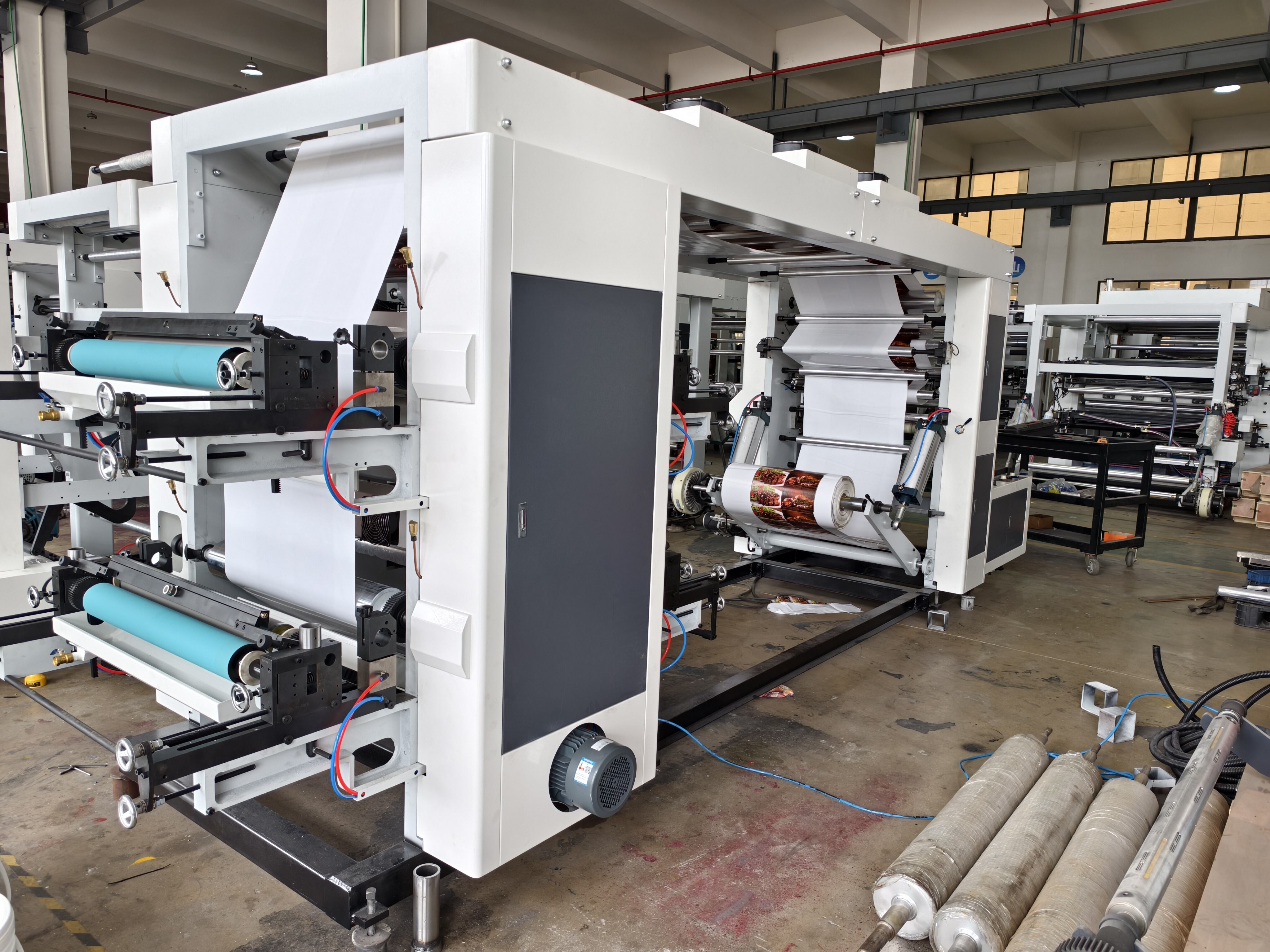
Multi-Material Compatibility: Engineering Flexibility Without Compromising Stability
40-350 gsm Adaptive Web Handling: How Automatic Tension & Guiding Systems Prevent Drift
Flexo printing machines made in recent years can consistently handle a wide range of substrates from 40 gsm films to 350 gsm kraft materials without any register displacement. Automatic tension regulation works in conjunction with web stress measuring load cells. As a result, changes in the properties of the materials are responded to by adjusting the pressure of the rollers instantaneously. Substrate positioning is done by optical edge sensors. This allows the servo controlled guiding systems to respond by making lateral adjustments in the substrate position up to 200 times per second. With these systems, alignment is maintained within ±0.1 mm at speeds exceeding 300 m/min. Across multiple runs, varied substrates are maintained without telescoping, wrinkling, or misregistration. This automation, when compared to manual adjustments, results in a 23% reduction in waste during changes in materials.
Specific Protocols for Ink Transfer Related to the Choice of Anilox Rollers, Mounting Plates, and Drying Techniques for Films, Foils, and Kraft Papers
Ink management has to be done differently for every substrate to ensure quality and adhesion. Films require the use of high-LPI anilox rollers of 1000 to 1200 lines per inches for the deposition of ultra-thin, uniform layers of ink that do not smudge. For foils, the use of medium-volume cells is justified to achieve the adhesion, and to balance the pooling, of the ink to the surface. Kraft paper needs deeper engravings to ensure the opacity and the full coverage of the ink to the texture of the surface. Further, precise plate mounting yields a positive change in performance: rigid with a compliant mount. Integrated drying systems with optimal adjustment features, based on the different substrate types, include the following:
Films: Less infrared energy with a longer dwell time to avoid distortion.
Foil: Moderate UV energy with nitrogen inerting to avoid oxidation.
Kraft: The use of high-velocity air at controlled humidity to achieve fast evaporation of the solvent, and at the same time prevent wrinkling.
This combination of techniques is meant to minimize ink set-off and maintain color consistency to a maximum across the different substrate types.
Technological Metrics that Validate Long Term Stability of Production
Uptime >92%: How Auto-Register, Quick Change Sleeves, and Predictive Maintenance Reduce Multi Run Instability
The ability to maintain above 92% operational uptime in multi-material environments is based on the combination of the following three technologies. Auto-register systems maintain ±0.05 mm alignment across kraft, film and corrugated substrates by actively compensating for web drift, an aspect that becomes particularly critical when the line is running with materials with different tension responses. Quick-change sleeves shorten job changeover time by 70%. Predictive maintenance systems detect unplanned downtime by analyzing the motor current, bearing vibration, and thermal signatures to schedule maintenance before failures occur. They directly prevent 43% of unplanned stops according to the Packaging Efficiency Report 2024. This triad of technologies represents the flexo printing machines of the future, capable of meeting throughput targets and reducing waste by 19% when compared to standard flexo presses.
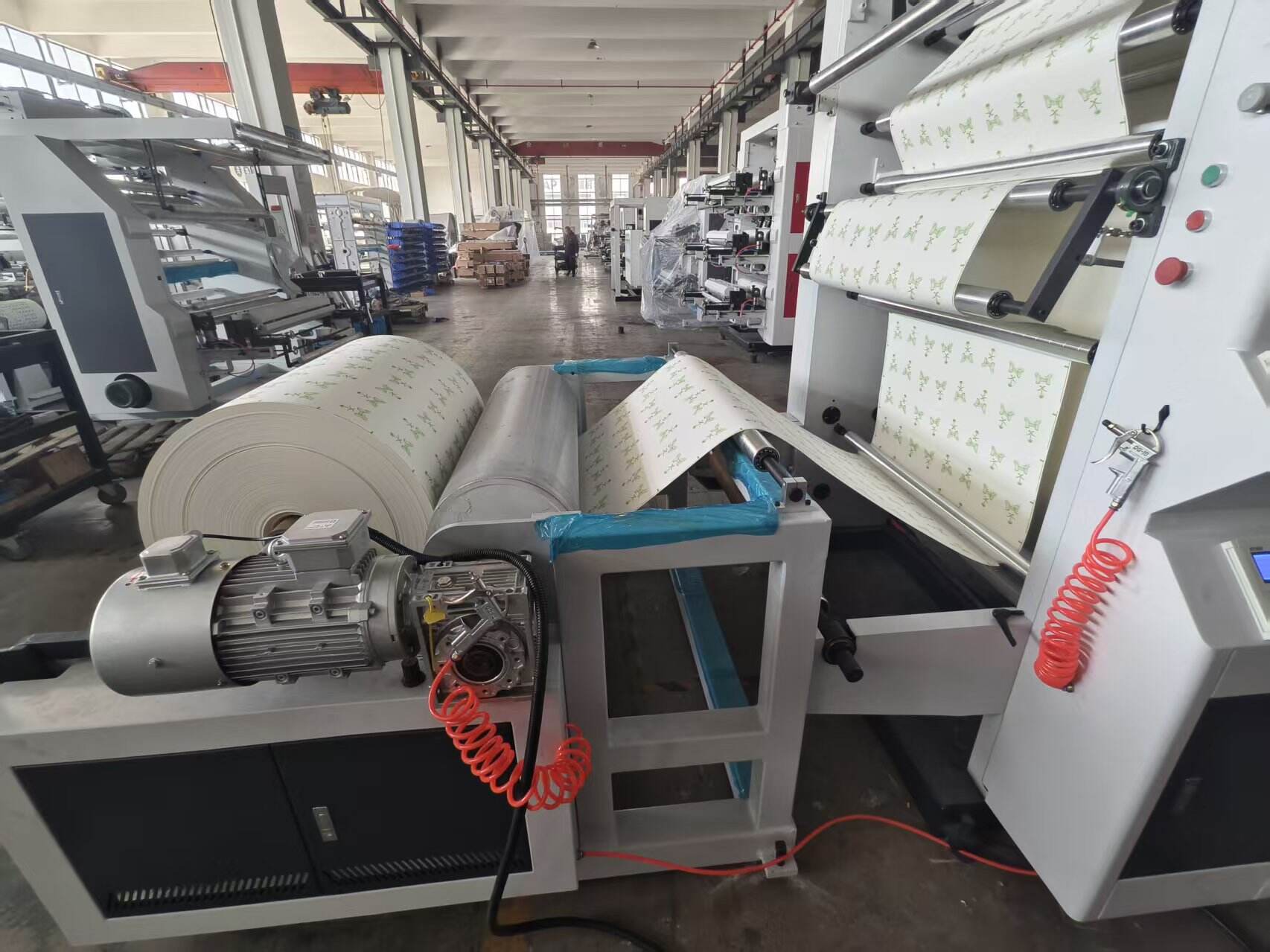
High-performance flexo systems multi-material stability performance indicators:
Performance metric Multi-Material Stability impact Metric improvement driver
Uptime % Directly measures maintenance predictability Predictive maintenance protocols
Registration tolerance Maintains consistency of printed image across multiple substrates Auto-register calibration
Change-over time Instability between jobs is reduced Quick change sleeve systems
Press Architecture Comparison: Why CI Flexo Printing Machines Lead in Multi-Material Stability
Drum-centric architecture is why Central Impression (CI) flexo printing machines are preferred when printing on multiple substrates. CI presses are able to provide more stability than stack or inline configurations because substrates are continuously wrapped around a single rigid steel impression cylinder resulting in more stability of the web as less slack is present and the web is less subject to changing web tension. This is particularly important when printing materials of variable thickness such as ultra-thin films (less than 40 microns), stretchable foils or thick corrugated board. CI Presses provide the needed stability and reduced lateral drift when printing material of variable grammage (more than 40 and less than 350 gsm).
The FAQ
Why is the CI drum significant in printing flexo? CI drum design enhances flexo printing quality across both rigid substrates and ultra-thin films. CI drum design minimizes deflection and ensures synchronized, vibration-free operation.
What improvements in modern tension control do you observe at material transitions? Closed loop tension control systems improve at material transitions and provide less material drift, improve web and registration control and significantly reduced waste.
What is the value of sub-grammage registration accuracy in flexo printing? It allows for optimal alignment and color accuracy across various substrates for fast and abrupt changes.
Can flexo presses run multiple substrates in one pass? Yes, flexo presses can run multiple substrates including 40 gsm films and 350 gsm kraft due to adaptive tension control, substrate specific ink systems, and integrated drying.
What is the impact of predictive maintenance on production uptime? In a high-demand printing environment, predictive maintenance increases uptime and reduces waste through the avoidance of unexpected breakdowns.