 EN
7 Critical Maintenance Routines to Extend the Lifespan of Your polythene bag printing machine Anilox Rollers
When colour starts drifting during a PE bag run, the anilox is worth checking, although it is not the only possible cause. Ink condition, blade setup, plates and film all play a part. A repeatable maintenance routine for a polythene bag printing machine gives operators a way to distinguish a dirty roll from one that needs professional attention, before a small mark turns into a long interruption.
An anilox meters ink through engraved cells to the printing plate. Deposits can reduce the space available for ink; damage or wear can change how the surface meters it. Research published in Coatings in 2021 found that both clogging and cell-wall wear can affect ink transfer, and that their effects may vary across a roll. The seven routines below are a practical framework, not a substitute for the instructions supplied with your equipment, roller and ink system.
1. Make isolation the first maintenance action
Before reaching into a polythene bag printing machine, stop the press and follow the site's documented energy-control procedure. Authorized personnel should isolate all relevant sources, address stored energy and verify the safe state before cleaning, inspecting or removing parts. A stop button alone is not an energy-isolating device. In the United States, OSHA's 29 CFR 1910.147 addresses hazardous energy during covered servicing; elsewhere, follow the applicable local requirements.
Use the roll supplier's handling instructions and the cleaner's safety information to choose protective equipment and ventilation. Do not wipe a moving roll by hand. If a task requires access or motion not covered by the normal procedure, stop and ask the responsible safety and maintenance staff to assess it.
2. Clean promptly after each suitable production run
For polythene bag printing machine maintenance, the end of a job is a useful point to remove ink before it dries in the cells. After isolation, use the cleaning method approved for the ink, roller coating and machine configuration. Follow the specified dilution, contact time and rinsing instructions; a stronger chemical or longer soak is not automatically a better choice.
Work systematically across the roll and clean the chamber and adjacent ink-contact parts as directed, so loosened residue is not carried back into the cells. Dry the roller according to supplier instructions. Keep separate, clean tools for different ink systems where cross-contamination is a concern. Record the ink and cleaner used, especially when changing between formulations.
3. Inspect the surface and cell pattern before restarting
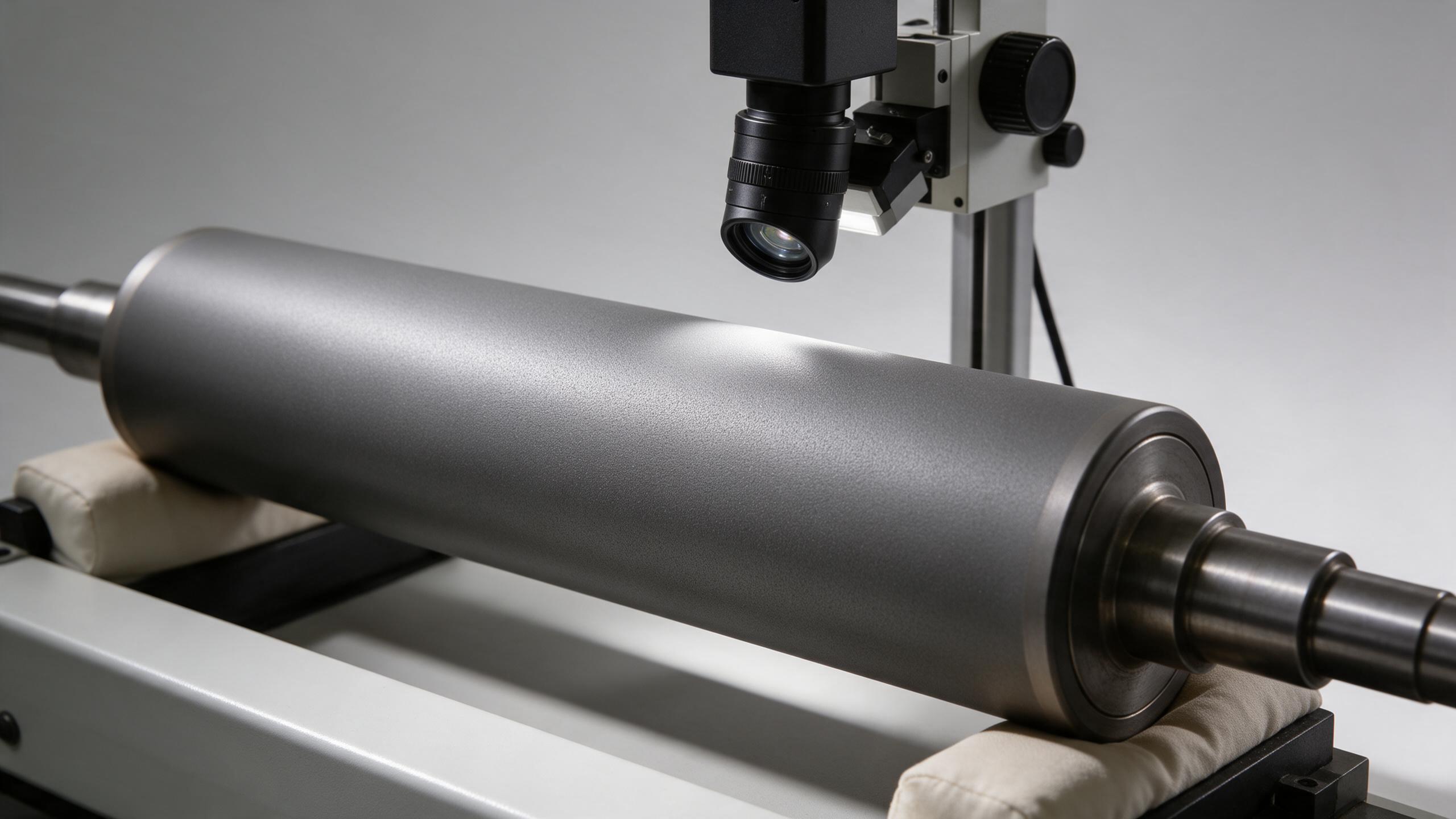
Once the polythene bag printing machine is isolated and the roll is accessible, inspect the surface under suitable lighting. Look for circumferential lines, chips, marks near the ends and ink left in patches. An appropriate magnifier or inspection instrument can reveal cell contamination that is difficult to see with the naked eye. Examine several positions across the face, not just the easiest area to reach.
A mark is a reason to investigate, not a diagnosis by itself. Photograph its position and compare it with earlier records. If a score or coating damage appears, hold the roller for review by a qualified supplier rather than trying to polish it out on the press. Avoid metal scrapers and improvised abrasives: tool selection must match the roller manufacturer's instructions.
4. Control blade condition, pressure and contamination
The blade chamber is part of anilox roller care for PE bag flexo printer operation. Inspect blades, seals and mounting components at the intervals recommended for the installed system. Replace damaged or worn items using the specified procedure, and set contact and pressure to the equipment supplier's guidance. More pressure is not a reliable fix for streaking; it may conceal the source while increasing wear.
Check the ink supply and filtration arrangement for particles that could become trapped at the blade. If a line appears, isolate the press, document the defect and inspect the chamber, blade and roll together. Ask whether the mark follows a change in ink, seal, blade or cleaning method. Restart only after the responsible technician has assessed the cause.
5. Schedule deep cleaning from evidence, not guesswork
Routine cleaning and deep cleaning serve different purposes. If a polythene bag printing machine shows a gradual loss of colour strength despite stable job settings, compare the roll with its clean baseline and consider a supplier-approved deep clean. First rule out other causes, including ink formulation, viscosity, plates and metering setup. Do not assume that a single change in print density proves the cells are blocked.
Confirm that any off-press or specialist cleaning process is suitable for the roller's coating, seals and construction. Record the method, operator, date and observed condition before and after the work. A clean-looking surface can still contain deposits, so use an appropriate inspection or volume measurement method when available. Do not mix cleaning products unless their suppliers explicitly allow it.
6. Handle and store rolls as precision components
During removal from a polythene bag printing machine, use the lifting points and equipment specified by the manufacturer. Keep the engraved surface clear of hard edges and do not rest it directly on a workbench. A small impact at the edge can make a roller unsuitable for a demanding print job, even when most of the face appears sound.
Once clean and dry, fit a compatible protective cover and use a rack or packaging intended for the roll's size and weight. Label the roll with its identification and condition so another shift does not install a damaged unit by mistake. Store it according to the supplier's guidance, and keep chemicals separate from components for which compatibility has not been confirmed.
7. Track measurements and turn findings into a maintenance plan
Create a record for each roller on the polythene bag printing machine: identification, engraving specification as supplied, ink system, cleaning history, observations and measurement method. If cell-volume equipment is available, establish a clean reference and repeat measurements at comparable locations using the same method. Record operating conditions and any uncertainty; readings from different instruments or methods are not automatically interchangeable.
Compare trends with print samples from similar jobs. If a measurement improves after cleaning, deposits may have contributed; if it stays low, discuss possible wear or measurement differences with the roll supplier. Agree on inspection frequency from actual workload and the maker's recommendations rather than promising a fixed lifespan. When a defect repeats, review the blade, ink handling and cleaning steps together.
A practical shift handover
A useful handover for a polythene bag printing machine can fit on one page: which roll ran, which ink and cleaner were used, whether any lines appeared, and what needs checking before the next job. The supervisor can assign a person and due date for any unresolved issue. Keep the record alongside the relevant equipment instructions, not in place of them.
Wenzhou Qiangtuo Machinery works with flexographic printing equipment for packaging applications. For a maintenance discussion, prepare the film type, ink system, roller identification, photos and the symptoms observed; confirm roller-specific limits with the roller and chemical suppliers. That shared information gives the team a more useful starting point than a colour complaint alone.
 Hot News