 EN
How Does Auto Tension Control Prevent Film Stretching on a High-Speed woven bag printing machine?
On a fast woven-bag line, web tension is not just a setting on a screen. It is the pulling force carried by the material as it moves from unwind through printing and onward to delivery. When that force changes too sharply, the web can elongate, slacken, or behave differently from one moment to the next. For a woven bag printing machine, automatic tension control is meant to keep that force within a suitable job-specific band while the line responds to roll diameter, speed changes, and normal process variation.
It is tempting to frame this as a speed question. More accurately, it is a speed-and-stability question. A High-Speed woven bag printing machine still needs a stable material path, workable ink and drying conditions, and settings that match the actual substrate. Automatic control does not make every material behave the same way; it gives the operator a repeatable way to respond when the web load begins to drift.
Why film or web stretching appears during a run
A woven bag printing machine moves a web through several zones that can each influence the pulling load. The unwind may release material differently as roll diameter changes. A nip, driven roller, printing section, or downstream take-up can introduce a mismatch in surface speed. Rapid acceleration and deceleration can add another disturbance. If the material is held at a higher load than the job can tolerate, it may lengthen temporarily or retain a change in shape, depending on its construction and condition.
That distinction matters for PP woven material and for film-based jobs. “Woven bag” or “film” is only the starting point; the actual construction, thickness, coating, treatment, humidity exposure, and converting route still need confirmation. A woven bag printing machine cannot be judged from a single speed figure alone. The useful question is whether the chosen tension response remains steady for the specified substrate, artwork, and run pattern.
What automatic tension control does in a woven bag printing machine
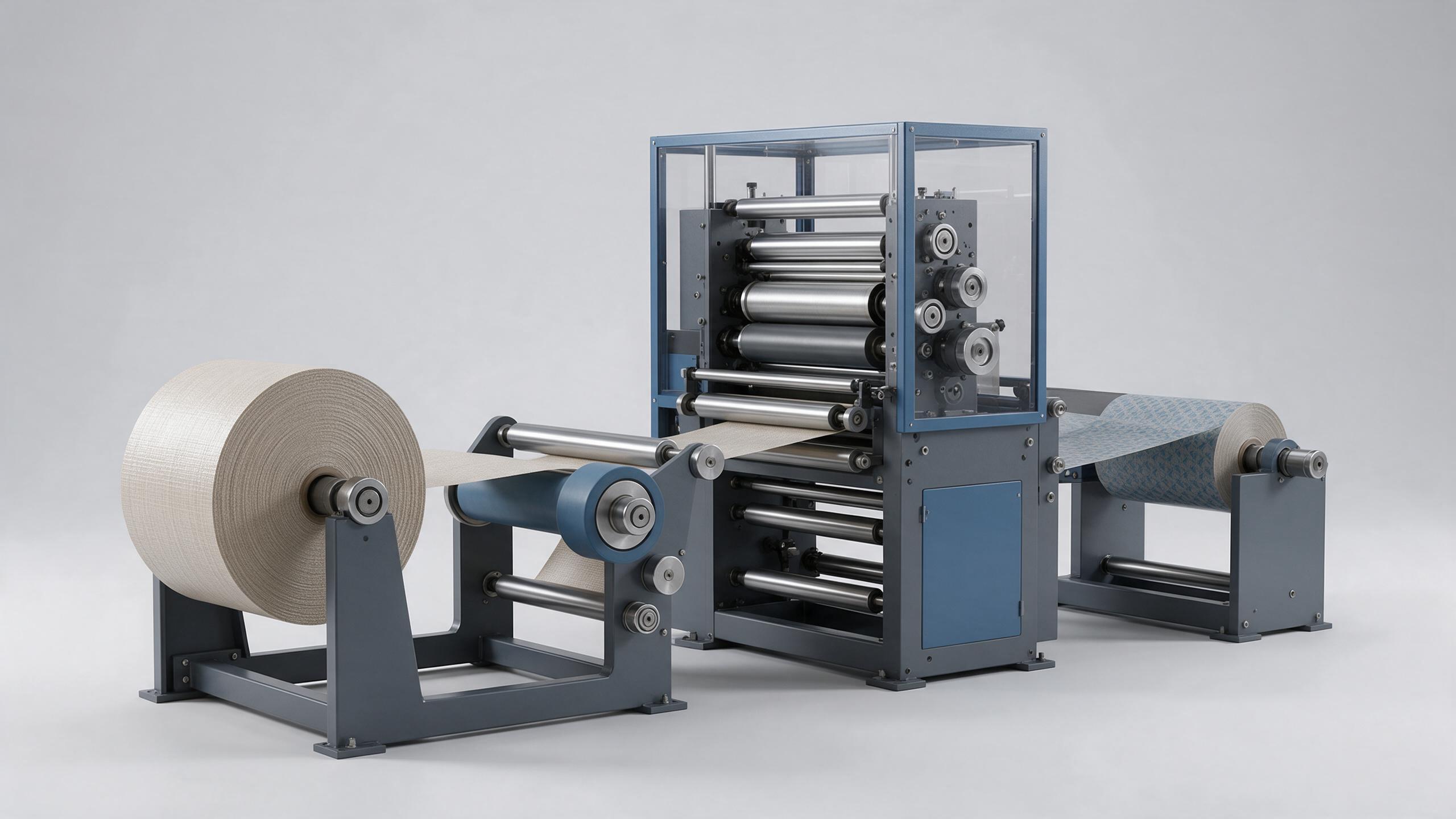
An automatic tension system forms a feedback loop. A sensing element or controlled dancer arrangement provides a signal related to web load or position. The controller compares that signal with the job target and adjusts an available actuator, such as an unwind brake, drive torque, or another controlled transport element. The aim is not to hold one universal number. The aim is to correct meaningful drift without creating repeated over-correction.
In practical terms, the loop helps a woven bag printing machine respond when the unwind roll becomes smaller, when the line changes speed, or when the web path experiences a short disturbance. Rather than asking an operator to make every correction by hand, the system can make controlled adjustments within the configured operating limits. The configuration still needs to be validated for the actual job; a feature list alone does not show whether a setting fits a production workflow.
How the control loop limits unwanted strain
The first benefit is continuity. When the web load stays closer to its intended condition, the material is less likely to see abrupt pulling changes caused by a shifting unwind or a transient speed mismatch. For a woven bag printing machine, that steadier path can support more consistent contact through the print section and a more predictable downstream handoff.
The second benefit is earlier correction. A manual adjustment often depends on an operator noticing a visible symptom, deciding which zone is responsible, and changing a setting. In an Auto Tension Control PP Woven Sack Printer configuration, the feedback loop can react to the measured condition before a small drift becomes a larger process interruption. That is not a blanket claim of defect-free output; it is a process-control principle that must be checked against the installed hardware and job conditions.
The third benefit is repeatability. Once a woven bag printing machine has a documented, appropriate setup for a recurring job, the crew can compare future runs against the same control logic. Records should distinguish observed facts from assumptions: material details, web path, target settings, changes made, and what happened afterward. This makes troubleshooting less dependent on memory.
Tension control is not the same as web guiding or registration
These functions can work together, but they address different signals. Tension control manages the pulling load in the web. Web guiding manages lateral position. Registration management addresses the relationship between printed colors or repeat positions. Drying and ink behavior may also influence what the operator sees on the finished bag. If print quality changes on a woven bag printing machine, it is not sound practice to assign every symptom to tension alone.
A useful review order is material, process, settings, and operation. Check whether the material specification matches the job record; then look at the web path and speed transitions; then review the tension target and controller response; finally, confirm how the line was operated. This order helps the team investigate a cause without turning a single setting into a universal explanation.
Checks before a high-speed run
Before running a High-Speed woven bag printing machine, confirm the job-specific material and the intended web route. Review whether the unwind, sensing arrangement, driven sections, and take-up are configured for the material direction and roll condition. Then confirm the target values, alarm behavior, and who may change control settings during production. These are verification points, not a substitute for an approved machine manual or production procedure.
- Confirm the substrate construction and any job-specific handling requirements.
- Inspect the web path for roller condition, wrap, contamination, and unexpected resistance.
- Verify that sensing and actuator feedback are stable before moving to the planned production speed.
- Record settings and visible observations during ramp-up so later adjustments have context.
- Review registration, ink, and drying observations separately from tension observations.
What operators should watch during the run
On a woven bag printing machine, watch for changes rather than relying on one isolated observation: repeated movement in the dancer range, unstable web travel, unexpected alarms, changes after acceleration, or a shift that appears when the roll becomes smaller. Those signs do not identify a cause by themselves. They create a useful condition record for checking the tension loop, web path, and material behavior together.
The same disciplined approach applies to an Auto Tension Control PP Woven Sack Printer. Ask: did the symptom begin after a speed change, a roll change, an adjustment, or a material variation? Was the effect seen through the same zone each time? Treat the answers as discussion points and verify the relevant configuration before finalizing a corrective action.
Questions to include in an RFQ or technical discussion
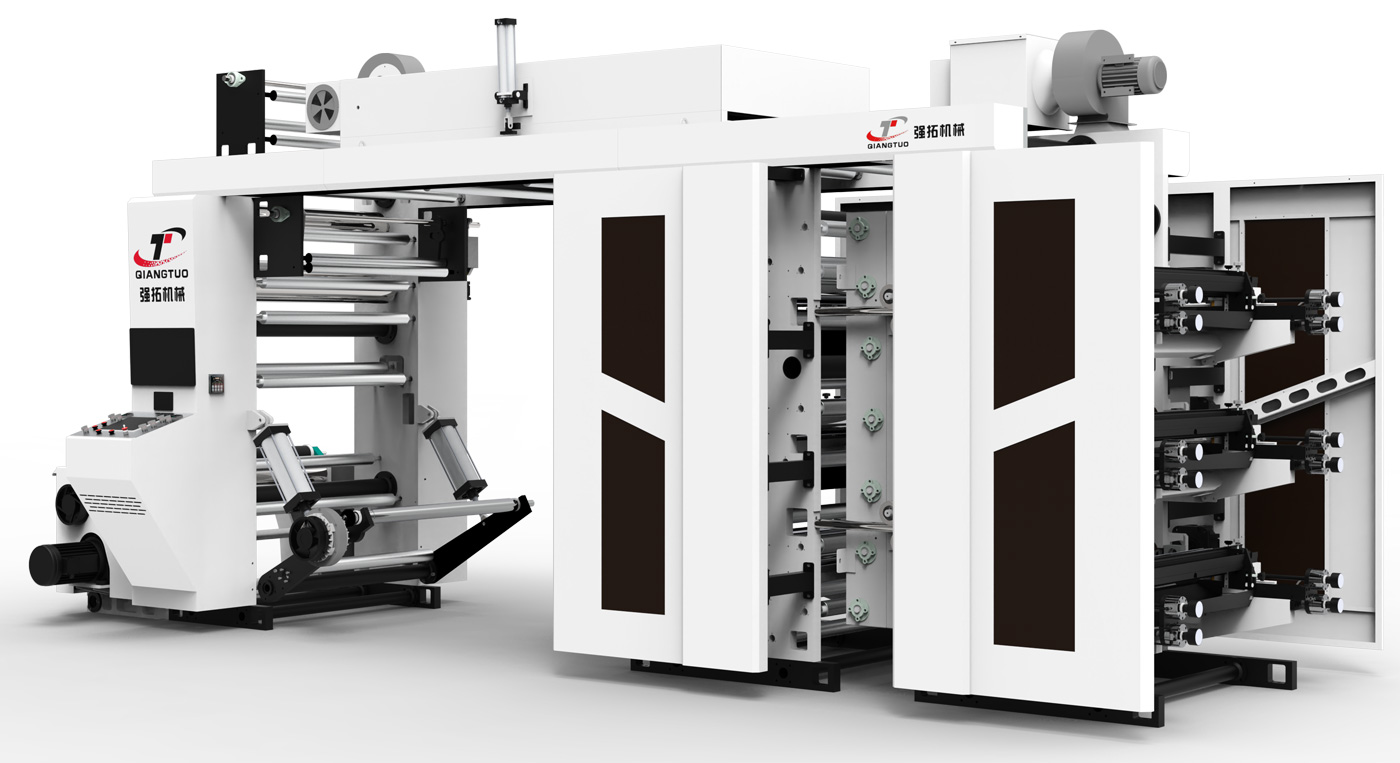
Wenzhou Qiangtuo Machinery is positioned in flexographic equipment for packaging-printing applications, including woven-bag work. For a woven bag printing machine inquiry, useful information includes the bag material, width and construction, artwork requirements, color and registration expectations, normal run pattern, changeover frequency, and the current web-handling concern. This allows a technical discussion to focus on application fit instead of a generic promise.
Automatic tension control can be a valuable part of a stable web-handling strategy, but its value depends on how the complete line and specific job are configured. Confirm the control architecture, adjustment range, compatible material conditions, test method, and support scope with the supplier or production team. That gives a high-speed woven-bag project a clearer basis for evaluating the proposed woven bag printing machine setup.
 Hot News