 EN
EN
The 4-Hour Downtime That Cost $32,000 – A Service Fragmentation Story
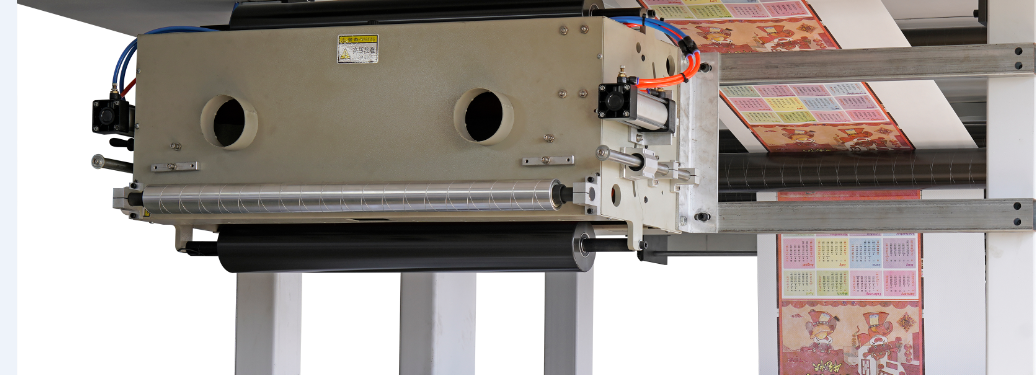
A mid-sized packaging converter was running a high-value job on their CI flexo press when a web tension issue caused registration drift. The production team called the press manufacturer, who said the problem was in the winder. They called the winder supplier, who blamed the anilox roll vendor. Three separate service calls, 4 hours of lost production, and $32,000 in lost throughput later, the problem was traced to a misaligned firmware update between the press controller and the mounter. No single vendor had tested the integration. The converter had saved $8,000 by sourcing components separately. They lost four times that in a single day.
This scenario is more common than many production managers admit. Over the past six years, our team has observed that the hidden costs of managing multiple vendors—coordinated service schedules, conflicting warranty terms, finger-pointing during faults—consistently erode the supposed savings of fragmented procurement. Understanding why integrated service is essential isn't just about convenience; it is about protecting production uptime and total cost of ownership.
Operational Friction – The Hidden Cost of Managing Multiple Vendors
Managing a modern flexo press line through separate vendors—for the central impression cylinder, anilox, mounter, and winder—introduces hidden costs that compound over time. Each supplier operates its own service schedule, spare parts lead times, and technical escalation path.
| Operational Challenge | Fragmented Service | Integrated Service |
|---|---|---|
| Service coordination | Multiple contacts, schedules | Single point of contact |
| Warranty resolution | Conflicting terms, finger-pointing | Unified warranty coverage |
| Root-cause analysis | Delayed by vendor disputes | Immediate, cross-system diagnostics |
| Firmware alignment | Risk of misaligned updates | Centralized version control |
| Travel & labour charges | 25%+ inflated (multiple visits) | Single visit, consolidated |
Procurement teams spend 15–20 extra hours per quarter negotiating service-level agreements and reconciling conflicting warranty terms. Worse, when a web tension issue arises between the unwinder and print unit, finger-pointing delays root-cause analysis—costing mid-sized converters $5,000–$8,000 per hour in lost throughput. Coordinating multiple service calls also inflates travel and labour charges by 25% or more versus a single-provider contract. Fragmented support further raises the risk of misaligned firmware updates, which can trigger registration drift and increased substrate waste. An integrated service model eliminates these gaps—delivering one accountable team for the entire press line.
Data-Backed Impact – The Numbers Don't Lie
A 2024 benchmarking study across 120 converting facilities confirms the tangible benefits of consolidated flexo press services.
| Performance Metric | Fragmented Service | Integrated Service | Improvement |
|---|---|---|---|
| Commissioning time | 6 weeks (typical) | 3.8 weeks | 37% faster |
| Unplanned downtime (18 months) | Baseline | 22% reduction | ~22% |
| Service-related travel costs | Baseline | 25% lower | ~25% |
| First-pass yield | ~88% | 96–98% | +8–10% |
| OEE | ~72% | 85–88% | +15–20% |
Plants using a single-source service model achieved commissioning 37% faster than those managing multiple vendors—cutting the typical six-week ramp-up to just under four weeks through unified installation, calibration, and training. Over the first 18 months, the same cohort saw a 22% reduction in unplanned downtime. This improvement stems from continuous, cross-system monitoring—enabled only by integrated diagnostics—that detects early wear patterns in anilox sleeves and CI drum bearings. Real-time data from the press, mounter, and winder feeds into a common diagnostic engine, triggering predictive maintenance alerts before catastrophic failures occur. The result is higher machine availability, tighter print registration, and more stable colour density—directly reducing makeready scrap and boosting output quality.
Custom Engineering – Matching Configuration to Application
The drive and impression system defines a flexo press's performance envelope—and custom engineering splits into two distinct philosophies: sprint-line and hydro-line configurations.
| Configuration | Drive Type | Speed Capability | Registration Accuracy | Best Substrate Application |
|---|---|---|---|---|
| Sprint-Line | Servo-driven linear motors | Up to 500 m/min | ±0.005 mm | Thin films (BOPP, PET) |
| Hydro-Line | Hydraulic cylinders | 150–250 m/min | ±0.05 mm | Thick materials (corrugated, paperboard) |
Sprint-line presses use servo-driven linear motors for rapid acceleration and instant stop, achieving speeds up to 500 m/min on thin, non-absorbent substrates like BOPP film. They deliver micron-level registration accuracy at high throughput, making them ideal for long-run labels and flexible packaging where changeover speed is secondary. Hydro-line configurations, by contrast, rely on hydraulic cylinders to deliver consistent impression force across wide web widths and thick materials such as corrugated board. These presses maintain ±0.05 mm registration at moderate speeds (150–250 m/min) and excel with heavy-caliper substrates requiring high nip force. The choice hinges on substrate compressibility and throughput needs: a converter running 12-micron PET at 400 m/min requires sprint-line capability; a box plant printing kraft liner needs hydro-line robustness.
Smart Automation – Synchronization Across the Workflow
Modern flexo presses achieve unprecedented stability by synchronizing the central impression unit, mounter, and winder via high-speed motion networks. The PLC continuously monitors tension feedback from load cells and automatically adjusts winding torque to maintain a consistent web path—eliminating manual tuning errors. Feedback loops correct slack or overstretch within microseconds during rapid speed changes, preventing web breaks.
| Automation Feature | Benefit |
|---|---|
| Real-time tension monitoring | Prevents web breaks; stabilizes registration |
| Predictive maintenance alerts | Reduces unplanned downtime by 22% |
| Closed-loop feedback | Corrects drift within microseconds |
| Job memory recall | Cuts setup time by up to 40% |
Intelligent algorithms in the press drives further suppress mechanical bounce at each station, dynamically compensating for variable sleeve and tape dynamics during setup. As a result, even complex jobs with multiple colour changes can be tuned in under a minute—cutting material waste and increasing throughput. The same automation sequences vacuum feed, web guiding, and die-cutting modules so all mechanical events follow a single, tightly orchestrated timeline—making zero-web-break handoffs a consistent production reality.
Balancing Automation Depth – Avoiding Vendor Lock-In
Deep automation delivers strong gains—but risks creating a closed ecosystem where every sensor, drive, and software upgrade comes exclusively from one supplier. To preserve flexibility, leading manufacturers design flexo press controls around open protocols such as OPC UA, EtherNet/IP, or Modbus TCP. This architecture allows integration of third-party inspection cameras, standalone coaters, or legacy winders without replacing the core PLC.
| Architecture Choice | Flexibility | Integration Risk |
|---|---|---|
| Proprietary protocols | Low; vendor-dependent | High; lock-in |
| Open protocols (OPC UA, EtherNet/IP) | High; multi-vendor | Low; interoperable |
When evaluating a custom automation proposal, request documented interoperability tests for the exact firmware versions of components already in your facility. A modular approach—where the press, mounter, and winder share a common automation backbone but communicate via standardized interfaces—delivers the rich data flow needed for predictive maintenance without locking you into a single-vendor dependency. This balance safeguards future investments, enabling adoption of innovations from multiple sources while maintaining the seamless synchronization that defines modern flexo efficiency.
Integrated Service – The BXKM Advantage
Achieving consistent, high-performance flexo press operation requires more than selecting components from a catalogue—it demands an engineering partner that understands the interplay of press mechanics, material handling, and automation across the entire production line. BXKM brings this integrated approach to auxiliary equipment for plastics processing. The company's expertise in pelletizing, mixing, conveying, and recycling supports the full production ecosystem. By supplying robust material handling and recovery solutions, BXKM ensures that the substrate entering the press is consistent, and that waste generated is effectively reprocessed. This comprehensive support, backed by a global supply chain, helps converters achieve maximum uptime and print quality, complementing the precision of the press itself.
FAQ
| Question | Answer |
|---|---|
| Why is integrated service essential for flexo presses? | Integrated service consolidates all support under one provider, eliminating the friction of managing multiple vendors—saving time, reducing downtime, and ensuring consistent technical support. |
| What is the data-backed impact of integrated service? | Facilities using integrated service achieve 37% faster commissioning and 22% lower unplanned downtime compared to fragmented service models. |
| What are sprint-line and hydro-line configurations? | Sprint-line uses servo-driven motors for high speed on thin films; hydro-line uses hydraulic cylinders for consistent impression on thick materials like corrugated board. |
| How does smart automation improve flexo press efficiency? | Smart automation synchronizes press, mounter, and winder via real-time feedback loops—preventing web breaks, reducing setup times, and enhancing precision. |
| Is vendor lock-in a risk with deep automation? | Yes, but it can be mitigated by using open protocols (OPC UA, EtherNet/IP) that allow third-party integration without replacing the core PLC. |
| How does BXKM support flexo press operations? | BXKM provides auxiliary equipment for plastics processing—pelletizing, mixing, conveying, and recycling—ensuring consistent substrate quality and waste reprocessing. |